
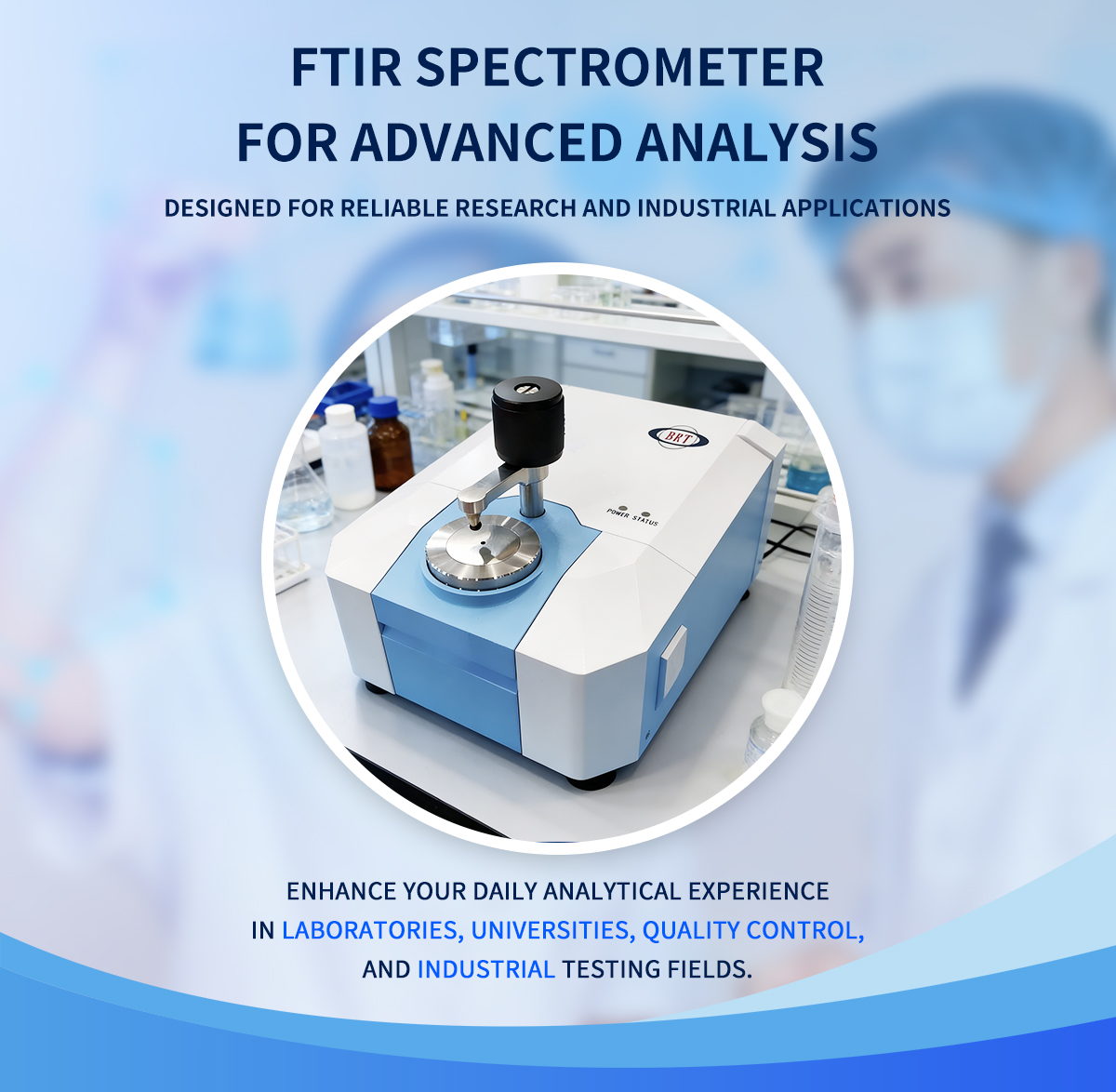
Understanding FTIR Spectrophotometers: A Fundamental Tool for Modern Material Analysis
In modern analytical laboratories, accurate material identification, molecular structure analysis, and qualitative & quantitative detection are indispensable core tasks. Among advanced spectroscopic instruments, the Fourier Transform Infrared (FTIR) spectrophotometer stands out as a powerful, versatile, and widely adopted tool for scientific research, industrial quality control, material development, and environmental monitoring. Renowned for its high precision, fast scanning speed, and comprehensive detection capabilities, FTIR spectroscopy has become a standard analytical method across numerous industries and academic fields.
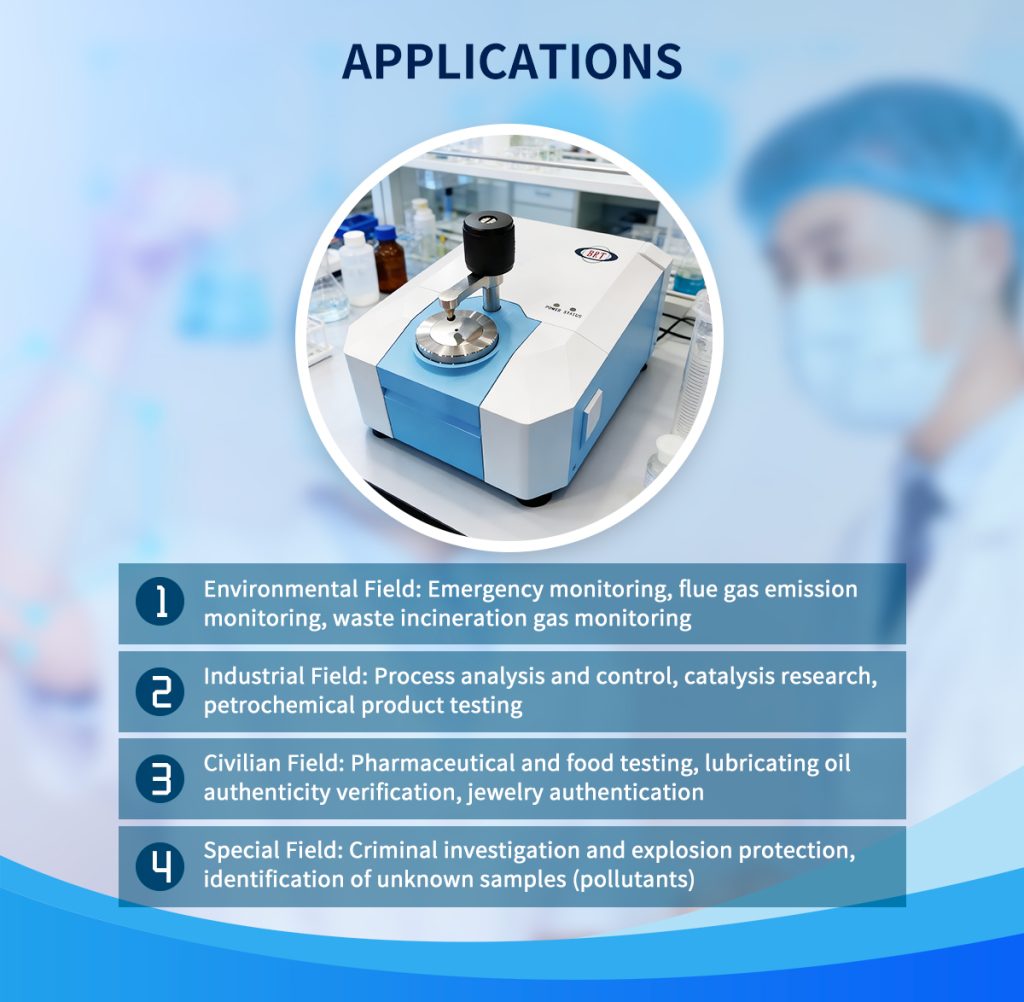
By detecting the infrared absorption characteristics of molecular functional groups in samples, FTIR spectrophotometers enable material identification, structural analysis, component quantification, and impurity detection. They are extensively applied in chemical research, polymer materials, pharmaceuticals, environmental protection, food safety, petrochemicals, forensic analysis, and university teaching laboratories.
What is an FTIR Spectrophotometer?
An FTIR spectrophotometer is a sophisticated optical analytical instrument that measures the infrared absorption or transmission spectrum of solid, liquid, and gaseous samples within the mid-infrared wavelength range. Unlike traditional dispersive spectrometers, it adopts Fourier transform mathematical algorithms to convert time-domain interference signals into clear infrared spectral data, realizing rapid and full-band spectral acquisition.
All organic and most inorganic molecules have unique infrared absorption fingerprints corresponding to their functional groups and molecular structures. When broadband infrared light irradiates a sample, specific wavelengths of light are selectively absorbed by molecular bonds, while the remaining light transmits through the sample. The instrument captures the interference signal of the transmitted light, processes data via Fourier transformation, and generates a characteristic infrared spectrum. By analyzing the position, intensity, and shape of spectral peaks, users can identify sample components, deduce molecular structures, and quantify substance content.
The core measurement principle is based on infrared spectroscopy absorption theory and Fourier transform algorithm. This mature and reliable technical mechanism allows laboratories to complete high-accuracy qualitative and quantitative analysis with minimal sample consumption, meeting diverse routine and advanced testing requirements.
How Does an FTIR Spectrophotometer Work?
The working process of an FTIR spectrophotometer is systematic and efficient, with standardized optical and data processing procedures:
First, the broadband infrared light source emits continuous infrared radiation covering the conventional detection wavelength range. The high-stability light source ensures consistent optical output for accurate and repeatable test data.
Next, the infrared light enters the Michelson interferometer, the core optical component of the instrument. The beam splitter divides the incident light into two coherent beams, which are reflected by a fixed mirror and a precision movable mirror respectively. The two beams produce optical interference after recombining, forming a time-domain interferogram that carries sample spectral information.
Then, the interference light beam passes through the sample compartment and interacts with the tested sample. The sample’s molecular functional groups absorb specific infrared wavelengths, modifying the characteristics of the interferogram.
Finally, the high-sensitivity detector captures the modulated interference signal, converts the optical signal into a digital electrical signal, and transmits it to the control system. The built-in software performs real-time Fourier transform operation to convert time-domain interference data into a standard infrared spectrum, which is displayed, stored, and analyzed for subsequent material identification and quantitative calculation.
Main Components of an FTIR Spectrophotometer
An FTIR spectrophotometer consists of multiple precision optical and electronic components that cooperate closely to ensure stable, high-resolution, and low-noise detection performance.
Infrared Light Source
It is responsible for providing stable broadband infrared radiation. Common configurations include high-temperature ceramic globar light sources and nichrome wire light sources, which cover the full mid-infrared detection band and feature long service life and low light attenuation, laying a foundation for consistent test results.
Interferometer
As the core optical module, it is mainly composed of a beam splitter, fixed mirror, and high-precision movable mirror. It modulates infrared light into interference signals and determines the instrument’s spectral resolution and scanning accuracy, which is the key to high-quality spectrum acquisition.
Sample Compartment & Holder
This is the carrier for sample testing, supporting the placement of solid tablets, liquid cells, and gas sample cells. The sealed optical design avoids external light interference, and flexible sample positioning adapts to various sample forms, improving test repeatability and data stability.
High-Sensitivity Detector
It receives the interfered optical signal penetrating the sample and converts weak optical signals into identifiable digital electrical signals. With high signal-to-noise ratio and fast response speed, it effectively captures subtle spectral changes of samples.
Control System & Professional Software
Modern FTIR spectrophotometers are equipped with intelligent operating systems and professional spectral analysis software, supporting background calibration, full-band spectrum scanning, functional group peak identification, spectral library matching, quantitative analysis, data comparison, and automatic report generation, realizing automated and intelligent laboratory analysis.
Applications of FTIR Spectrophotometry
Thanks to its non-destructive testing, full-band scanning, and multi-scenario adaptability, FTIR spectrophotometers cover a wide range of laboratory and industrial application scenarios, serving both routine detection and advanced scientific research.
- Chemical & Material Analysis
It is widely used for structural identification of organic compounds, inorganic material component analysis, polymer material characterization, and reaction process monitoring. It helps researchers analyze material composition, judge structural changes, and verify synthetic products, providing core data support for material development and chemical research.
- Pharmaceutical Research & Quality Control
In the pharmaceutical industry, FTIR instruments are applied for raw material drug identification, pharmaceutical auxiliary material detection, finished drug purity verification, ingredient consistency analysis, and drug degradation monitoring, ensuring pharmaceutical production compliance and quality stability.
- Environmental Monitoring & Testing
The instrument supports qualitative and quantitative detection of organic pollutants in water bodies, air volatile organic compounds (VOCs), and solid waste components. It is an essential tool for environmental sample analysis, pollution source tracing, and routine environmental quality monitoring.
- Food & Agricultural Product Testing
It is used for food ingredient analysis, additive detection, authenticity identification of agricultural products, and deterioration monitoring of food raw materials. It realizes rapid screening of food quality risks and ensures food safety and production consistency.
- Petrochemical & Industrial Detection
In petrochemical, rubber, plastic, coating, and adhesive industries, FTIR spectrophotometers detect product component uniformity, analyze raw material purity, and monitor product aging and deterioration, supporting industrial production quality control and process optimization.
- Teaching & Scientific Research Laboratories
With clear principles and intuitive spectral analysis results, FTIR instruments are standard teaching and experimental equipment in universities and research institutes, helping students and researchers master molecular spectroscopy principles and carry out innovative scientific research projects.
Why Are FTIR Spectrophotometers So Widely Used?
The enduring popularity of FTIR spectrophotometers stems from their comprehensive advantages in performance, efficiency, and applicability, perfectly matching modern laboratory and industrial testing needs.
Full-band fast scanning: Different from traditional single-wavelength testing instruments, FTIR completes full infrared band scanning in seconds, greatly improving laboratory testing efficiency and suitable for high-volume sample detection.
High sensitivity and accuracy: Equipped with high-precision optical modules and Fourier transform algorithms, the instrument features low noise, high signal-to-noise ratio, and high spectral resolution, enabling accurate identification of trace components and subtle structural differences.
Non-destructive and micro-sample testing: Most tests require only a tiny amount of sample and cause no structural damage to the sample. The tested sample can be reused, reducing experimental costs and saving sample resources.
Powerful versatility: A single instrument supports testing of solid, liquid, and gas samples, covering qualitative identification, structural analysis, quantitative detection, and spectral comparison, meeting diverse testing demands of multiple industries.
Stable and cost-effective: With mature optical structure and stable performance, FTIR spectrophotometers require low daily maintenance costs. Compared with high-end precision analytical instruments, they achieve a better balance between performance and cost, suitable for long-term routine laboratory use.
Points to Consider
While FTIR spectrophotometers have outstanding comprehensive performance, they also have certain application limitations. The instrument is sensitive to water vapor and carbon dioxide in the air, which may interfere with spectral results without proper background calibration. In addition, it has limited detection capability for pure inorganic simple substances and cannot fully replace chromatographic and mass spectrometry equipment for ultra-trace quantitative analysis.
Standardized sample pretreatment, regular instrument calibration, and stable laboratory environment are essential to ensure test accuracy. For conventional material identification, structural analysis, industrial quality control, and teaching research, FTIR spectrophotometers remain the preferred reliable analytical tool.
How to Choose the Right FTIR Spectrophotometer
Laboratories and enterprises need to select suitable FTIR spectrophotometers according to actual testing scenarios and core demands, focusing on the following key parameters:
Spectral resolution, infrared wavelength range, signal-to-noise ratio, scanning speed, stray light suppression performance, sample adaptation functions, professional spectral analysis software functions, equipment stability, daily maintenance difficulty, and after-sales technical support.
For routine teaching and simple material identification, basic standard models can meet the demands; for pharmaceutical precision detection, environmental trace analysis, and high-precision scientific research, high-resolution, low-noise professional models are recommended to match rigorous testing standards.
Final Thoughts
FTIR spectrophotometers have long been core analytical instruments in modern laboratories. With unique advantages in molecular structure analysis, material identification, and component detection, they provide accurate, efficient, and reliable data support for scientific research, industrial production, quality supervision, and environmental monitoring.
As laboratory analytical standards continue to improve and new material research advances, FTIR spectroscopy technology will maintain its irreplaceable application value. For users pursuing stable performance, diverse functions, and cost-effective laboratory analysis solutions, a high-quality FTIR spectrophotometer is a wise long-term investment.
At Shenyang Baoruitong Automation Equipment Co., Ltd., we focus on providing high-performance, stable, and user-friendly FTIR spectrophotometer solutions for global educational institutions, scientific research laboratories, and industrial enterprises. With reliable instrument quality and professional one-stop technical support, we help customers improve analytical accuracy, optimize testing workflows, and enhance overall laboratory work efficiency.