
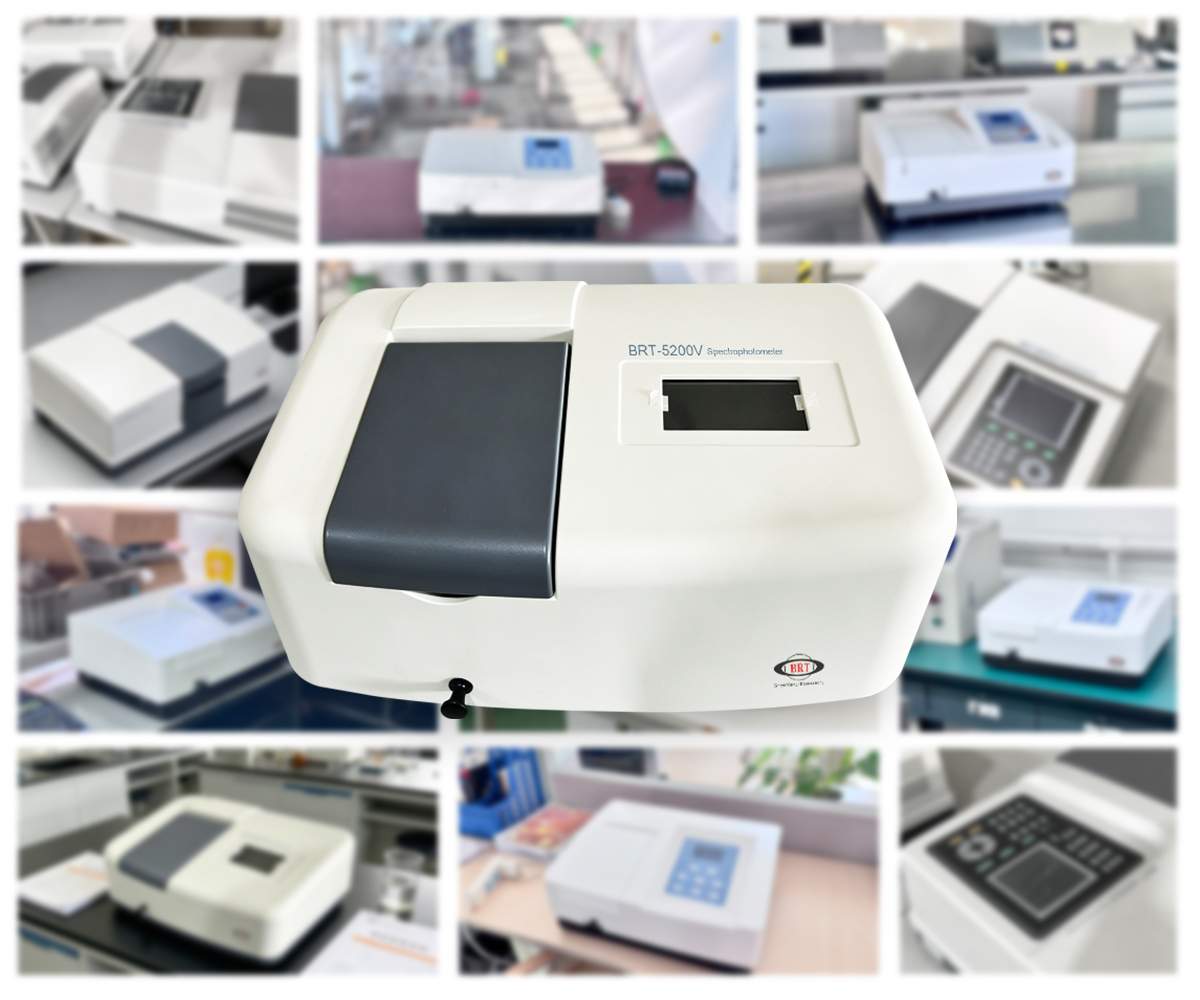
Mastering UV-Vis Spectrophotometers: Indispensable Analytical Gear for Modern Lab Operations
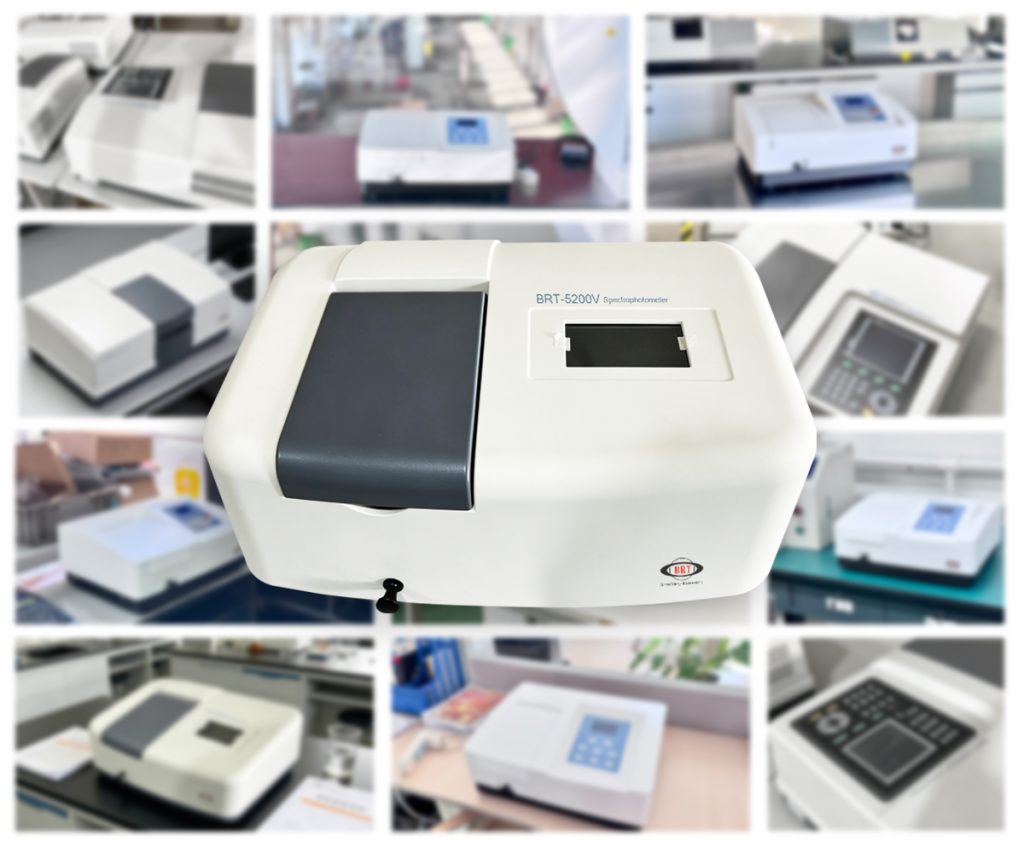
In today’s analytical labs, rapid testing data, precise readings and streamlined operation are non-negotiable. Among all mainstream lab analytical devices, the UV-Vis spectrophotometer stands out as a multi-scenario workhorse for daily routine detection, academic research and factory quality control.
By quantifying the absorption and transmission of ultraviolet and visible light by samples, UV-Vis spectrophotometers empower labs to quantify substance concentrations, identify unknown components and complete diverse testing workflows. It is widely adopted across chemical labs, pharmaceutical R&D, life science research, environmental monitoring, food safety inspection, university teaching and industrial quality inspection departments.
What Exactly Is a UV-Vis Spectrophotometer?
A UV-Vis spectrophotometer is a precision analytical device that measures absorbance and transmittance of liquid samples within UV and visible light wavelength bands.
When incident light penetrates a liquid sample solution, part of the light energy is absorbed by solute molecules, and the rest passes through the sample. The equipment compares the intensity of incoming light and outgoing transmitted light to calculate absorbance values, then calculates the concentration of target substances inside the sample.
The core theoretical basis of this detection logic is the Beer-Lambert Law, which establishes the linear correlation between absorbance, sample concentration and optical path length. After standardized testing methods are set up, labs can carry out fast, stable quantitative detection with consistent repeatability.
Working Mechanism of UV-Vis Spectrophotometers
The operating logic of UV-Vis spectrophotometers is clear and systematic, split into four core steps:
- Light source emits continuous light covering ultraviolet and visible spectrum bands;
- Monochromator splits composite light into monochromatic light and screens out the target testing wavelength;
- Filtered monochromatic light passes through the cuvette loaded with test samples;
- High-sensitivity detector captures residual transmitted light, converts optical signals into electrical signals, and the built-in system computes and displays absorbance, transmittance or concentration data.
If a sample strongly absorbs light at a specific wavelength, only weak light reaches the detector, corresponding to a high absorbance reading. Based on this data, technicians can compare sample differences, monitor chemical reaction dynamics and calculate unknown concentrations efficiently.
Core Hardware Modules of UV-Vis Spectrophotometers
Every functional UV-Vis spectrophotometer consists of matched core components that jointly guarantee stable, accurate detection performance:
1. Light Source
Provides stable optical energy for full-spectrum scanning. Deuterium lamps serve UV wavelength testing, while tungsten-halogen lamps support visible light range measurement. Constant luminous intensity is the premise of consistent test results.
2. Monochromator
Responsible for light splitting and wavelength selection. Its precision directly determines wavelength accuracy and anti-interference ability of the whole instrument, effectively reducing stray light interference during detection.
3. Sample Cell Holder
Fixes standard cuvettes and micro sample cells. Precise optical positioning and stable clamping effectively reduce test deviation caused by sample displacement, improving data repeatability.
4. Signal Detector
Receives transmitted light after sample penetration and converts optical signals into recognizable electrical signals for subsequent data processing and output.
5. Control & Analysis Software System
All new-generation spectrophotometers are equipped with digital touch screens and professional analysis software, supporting multiple testing modes: fixed-wavelength photometry, full-spectrum scanning, quantitative calibration, kinetic curve recording, as well as data storage, export and report printing.
Wide Application Scenarios of UV-Vis Spectrophotometry
The biggest competitive advantage of UV-Vis equipment lies in its ultra-wide applicability, covering both basic teaching experiments and high-standard industrial & research testing:
- General Chemical AnalysisDetect organic solvents, inorganic metal ions, colored solutions and chemical reaction systems. Ideal for concentration calibration in research labs and production workshops, delivering low-cost, high-efficiency quantitative testing.
- Biology & Biochemical DetectionCommonly used for nucleic acid (DNA/RNA) quantification and protein concentration testing in molecular labs, also supporting sample purity screening before PCR, sequencing and cell culture experiments.
- Pharmaceutical R&D & Quality SupervisionCovers raw material incoming inspection, active ingredient identification, content quantitative analysis, auxiliary material testing and finished medicine batch quality control, meeting pharmaceutical industry regulatory testing standards.
- Environmental & Water Quality MonitoringApplied in surface water, factory wastewater and drinking water testing, detecting heavy metal ions, organic pollutants and nutrient elements to support routine environmental monitoring work.
- Food & Cosmetic InspectionFor raw material ingredient analysis, pigment content detection, product consistency verification and impurity screening in food, beverage and cosmetic production lines.
- University & Vocational Teaching LabsSimple working principle, low operation threshold and intuitive test data make it the standard teaching instrument for analytical chemistry, biochemistry and environmental majors.
- Factory Routine Industrial QCChemical plants, new material labs and product inspection departments rely on UV-Vis spectrophotometers for daily absorbance testing and batch sample comparison to stabilize production quality.
Core Advantages That Make UV-Vis Spectrophotometers Lab Staples
Laboratories of all scales prefer UV-Vis spectrophotometers due to their balanced performance, cost and usability:
- Ultra-Fast Detection SpeedSingle fixed-wavelength testing finishes within seconds; full-spectrum scanning only takes several minutes, greatly boosting daily lab testing throughput.
- Low Operation BarrierIntuitive human-machine interaction, preset standard test programs and automatic calibration functions enable new operators, students and QC staff to master operation quickly without complex professional training.
- Non-Destructive Sample TestingSamples remain largely intact after detection, allowing repeated testing of precious, limited samples and follow-up other experimental operations.
- Multi-Functional IntegrationOne single device realizes absorbance measurement, transmittance testing, spectrum scanning, standard curve quantification and dynamic reaction monitoring, reducing lab equipment procurement costs and space occupation.
- Economical Long-Term SolutionCompared with high-end analytical instruments such as HPLC and mass spectrometers, UV-Vis spectrophotometers feature lower purchase cost, simpler maintenance and lower consumable loss, perfectly matching daily conventional testing demands.
Objective Limitations of UV-Vis Spectrophotometry
No analytical technology fits all testing scenarios. UV-Vis detection has inherent constraints: Its sensitivity and identification selectivity fall behind fluorescence spectroscopy, liquid chromatography and other advanced testing methods for trace ultra-low concentration samples. Meanwhile, stray light, incomplete sample pre-treatment, cuvette optical quality and instrument parameter configuration will all interfere with final detection accuracy.
This does not negate its practical value. Labs only need to select matching instrument models and formulate standardized sample pre-processing methods according to testing targets. For daily routine detection, teaching experiments and medium-concentration quantitative analysis, UV-Vis spectrophotometers remain the most cost-effective choice.
Key Factors for Selecting Suitable UV-Vis Spectrophotometers
When purchasing UV-Vis equipment, labs should evaluate the following core indicators based on actual testing demands:
- Wavelength coverage range
- Spectral bandwidth resolution
- Photometric accuracy and repeatability
- Stray light suppression performance
- Built-in software functional modules
- Compatible sample volume and cell types
- Daily maintenance difficulty
- Manufacturer after-sales service and technical support capacity
The optimal spectrophotometer must align with your lab’s core business, whether for university teaching, water environmental monitoring, pharmaceutical ingredient testing or industrial mass batch QC.
Closing Summary
UV-Vis spectrophotometers have maintained irreplaceable status in global analytical laboratories for decades. Their fast, simple, non-destructive detection capacity supports massive testing demands across scientific research, education, pharmaceutical manufacturing, environmental governance and industrial production.
Facing continuously upgraded lab testing standards, UV-Vis spectrophotometry still acts as the foundational basic analytical technology. For labs pursuing balanced performance, easy operation and cost control, a well-manufactured UV-Vis spectrophotometer is a long-term valuable investment.
Shenyang Baoruitong Automation Equipment Co., Ltd. focuses on developing and manufacturing high-performance UV-Vis spectrophotometers, supplying stable, cost-effective analytical equipment and one-stop technical solutions for teaching, industrial and scientific research labs worldwide. Our reliable instruments and full-cycle professional technical support help every customer boost testing efficiency and ensure stable, credible experimental data.
Contact Us for Custom UV-Vis Spectrophotometer Solutions
📧 Email: info@brt-test.com 🌐 Official Website: https://brt-test.com 🌐 Alibaba International Store: https://sybrt.en.alibaba.com/ 📱 WhatsApp: +86-15604057553
#UVVis #UVVisSpectrophotometer #LabAnalyticalInstrument #QualityControlLab #ChemicalTesting #PharmaceuticalLab #EnvironmentalAnalysis #LabEquipment #BRTInstrument