
From Electronics to Aerospace — Understanding Flammability Testing Scenarios and Standards
In modern manufacturing, “safe” is not a claim; it is a verified data point. Across industries, from the smartphones in our pockets to the aircraft in our skies, flammability testing is the invisible shield protecting lives and property.
Flammability testing equipment is the core tool for evaluating material fire safety, with applications spanning multiple industries, regulatory links, and product life cycles. Its core value lies in verifying whether materials meet stringent fire safety standards, preventing fire risks, and supporting market access.
As a professional manufacturer of fire safety and laboratory testing instruments, Shenyang Baoruitong Automation Equipment Co., Ltd. (BRT) presents this comprehensive guide to the five key application scenarios where flammability testing is critical.
1. Electronics and Electrical Equipment: Preventing the Spark
Electronics often operate at high temperatures or in confined spaces, making fire prevention paramount. Testing focuses on materials that may ignite due to short circuits or overheating.
- Component-Level Testing: Evaluating insulation materials (PVC, silicone rubber) to ensure they do not spread flames. Standards include UL 94 for plastics and IEC 60332-1 for wire flame resistance.
- Product-Level Testing: Verifying complete devices (laptops, power adapters) to ensure they self-extinguish if internal components ignite, complying with IEC 62368-1.
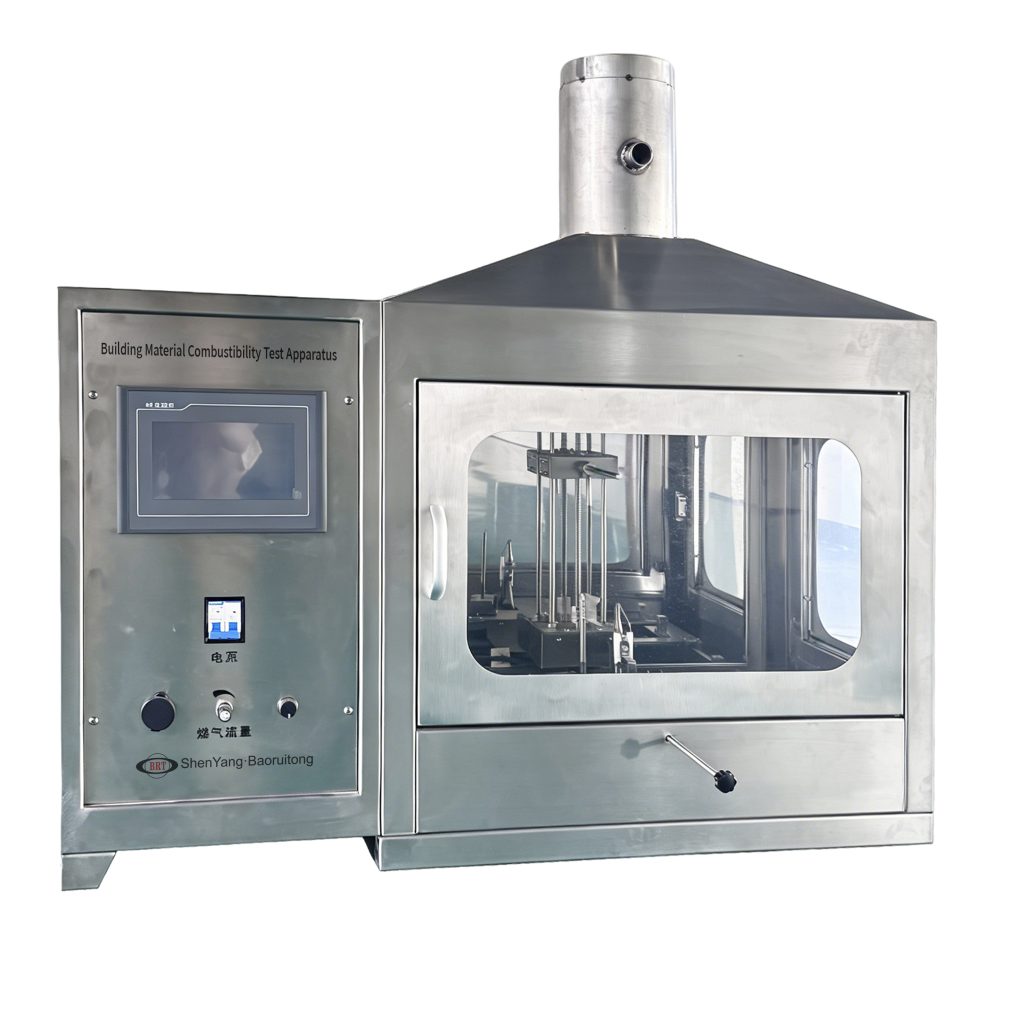
2. Building Materials: Containing the Blaze
Structural and decorative materials (walls, floors, insulation) are directly related to the spread of fires in buildings. Poorly performing materials release toxic smoke and accelerate fire propagation.
- Fire Classification: Testing wall panels and flooring to determine “flame spread” and “smoke developed” indices per ASTM E84 or GB/T 8624.
- Insulation Integrity: Evaluating materials like polyurethane foam per ISO 1182 for non-combustibility and GB/T 20284 for smoke toxicity—areas where BRT’s high-temperature furnaces deliver industry-leading precision.
3. Textiles and Apparel: Protecting the Wearer
Textiles are inherently flammable. Testing focuses on ignition sensitivity and self-extinguishing ability to prevent severe burn injuries.
- Consumer Safety: Testing children’s sleepwear and synthetic fabrics per 16 CFR Part 1610 (U.S.) and BS EN 14878 (EU).
- Industrial Workwear: Evaluating flame-retardant uniforms for firefighters and oilfield workers per NFPA 2112 to confirm they resist ignition under extreme heat.
4. Aerospace and Transportation: High-Risk, High-Standard
Closed environments like aircraft cabins and subway tunnels are extremely high-risk. Regulatory bodies impose the world’s strictest flammability standards.
- Aerospace: Testing cabin seat cushions and carpets per FAA FAR 25.853, requiring materials to self-extinguish within 12 seconds.
- Automotive & Rail: Evaluating interior plastics and fabrics per FMVSS 302 (U.S.) and BS 6853 (UK) to ensure passenger safety during thermal runaway incidents.
5. Children’s Products: Safeguarding the Future
Global regulations mandate flammability testing for toys, strollers, and crib mattresses to eliminate fire hazards for minors.
- Mandatory Compliance: Ensuring products meet CPSIA and EN 71 flammability requirements before they reach the nursery.
BRT’s Solution: Precision Testing for Every Scenario
To help manufacturers navigate this complex landscape of standards, Baoruitong Automation Equipment Co., Ltd. (BRT) offers a comprehensive matrix of high-precision testing instruments:
- Fire & Flame Testing Series: Including SBI testers, cone calorimeters, and vertical/horizontal flame chambers designed to meet ISO, EN, and ASTM standards.
- Analytical Instruments: High-resolution FT-IR Spectrometers (BRT-860/890) and UV-Vis Spectrophotometers for analyzing chemical composition and smoke toxicity.
- Plastic & Pipe Testing: Advanced hydrostatic and impact testers for verifying the long-term durability of infrastructure materials.
FAQ
What are the most common flammability test standards? Common standards include UL 94 (Plastics), ASTM E84 (Building), 16 CFR 1610 (Textiles), and FAR 25.853 (Aerospace). BRT equipment is designed to be compatible with these and many other regional standards.
Why is smoke toxicity testing important? In building fires, smoke inhalation causes more casualties than direct flames. Instruments like the BRT FT-IR Spectrometer are essential for measuring toxic gas concentrations (CO, CO2, HCN) in smoke.
Does BRT provide equipment for automotive interior testing? Yes, we offer specialized flammability testers compliant with FMVSS 302 and ISO 3795 for evaluating fabrics, plastics, and foams used in vehicle interiors.
How do I choose the right equipment for my industry? Selection depends on your specific product material and the target market’s regulatory requirements. Contact our expert team for a customized testing solution.
Get a Quote Today
Ready to verify your product’s fire safety? Contact Baoruitong Automation Equipment Co., Ltd. today for detailed datasheets, test procedure guidance, and a customized quotation.
Email: info@brt-test.com | WhatsApp: +86 15604057553 | Web: www.brt-test.com