New EN 13823 Single Burning Item Test Apparatus Launched for Construction Fire Classification Labs

This news introduces the upgraded EN 13823 Single Burning Item Test Apparatus launched by our brand, a core lab device for Euroclass fire classification of wall, facade and ceiling construction materials. Equipped with double insulated duct, mobile trolley and high-precision auto control system, it stably measures heat release, smoke and flame spread, with full global after-sales support for testing laboratories.

Vicat / HDT Testers: Performance Characteristics and How to Choose

This paper introduces integrated Vicat/HDT testers from Shenyang Baoruitong. It contrasts Vicat puncture test and HDT bending test, listing core merits including dual-test design, uniform oil bath heating and automatic detection. It covers applicable scenarios, test interference factors, common faults and maintenance, stressing standardized operation to guarantee comparable test data.

The Physics of Measuring Carbon Black: How a Combustion Tester Turns a Burn Into a Number

This paper elaborates on the working principle of carbon black content testers based on gravimetric combustion. It distinguishes carbon black content testing from dispersion testing, analyzes common measurement errors, and lists key instrument performance indicators and applicable standards. It also introduces standardized test equipment from BRT for plastic, cable and geosynthetic labs.

Shenyang Baoruitong Launches GJ16C Pipe Hydrostatic Pressure Testing Machine for Global Pipe Quality Inspection

This document introduces the GJ16C plastic pipe hydrostatic tester, including its control system, technical parameters, matched constant temperature water tank and 304 stainless steel fixtures. It meets multiple GB and ISO standards for long-term static pressure and burst tests. Featuring modular independent channels, high precision, power-off data storage and energy-saving temperature control, the whole set supports customized configurations for pipe inspection institutions.

Understanding FTIR Spectrophotometers: A Fundamental Tool for Modern Material Analysis

This article elaborates on the working principle, core components, diverse applications, and key advantages of FTIR spectrophotometers. It also illustrates the instrument’s limitations and selection criteria. Featuring fast scanning, high accuracy and non-destructive testing, FTIR serves as a reliable, cost-effective analytical tool widely used in labs, pharmaceuticals, environmental testing and industrial quality control.

Mastering UV Vis Spectrophotometers: Indispensable Analytical Gear for Modern Lab Operations

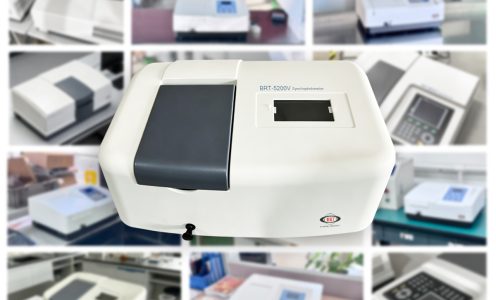
This article comprehensively introduces UV-Vis spectrophotometers, a mainstream multi-scenario analytical instrument widely used in laboratories. It elaborates on the instrument’s definition, core detection principle based on the Beer-Lambert Law, complete working flow and key structural components including light source, monochromator and detection system.
The paper covers its extensive application fields ranging from chemical analysis, biochemistry, pharmaceutical quality control, environmental water monitoring to food testing and university teaching labs. It analyzes core strengths such as fast testing speed, simple operation, non-destructive detection and cost efficiency, while objectively stating its limitations in sensitivity and selectivity for trace samples.
Furthermore, it lists critical parameters for instrument selection according to laboratory practical demands. The text concludes that UV-Vis spectrophotometers remain a cost-effective foundational testing tool for routine analysis, teaching and industrial QC. Finally, it introduces Shenyang Baoruitong Automation Equipment Co., Ltd.’s reliable spectrophotometer products and global supporting service channels for laboratory users.

Understanding UV-Vis Spectrophotometers: A Practical Tool for Modern Laboratory Analysis

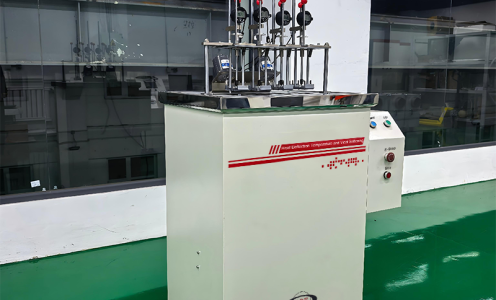
This paper elaborates on the working principle of UV-Vis spectrophotometers based on the selective light absorption of substances. As an efficient and precise analytical instrument, it supports qualitative and quantitative tests. Widely adopted in modern laboratories, it serves as a reliable practical tool for chemical, environmental, pharmaceutical and other routine sample analyses.

What is a UV-Vis spectrophotometer?

Ultraviolet-visible (UV-Vis) spectrophotometer is a common laboratory analytical instrument that detects the absorbance and transmittance of liquid samples within ultraviolet and visible spectral ranges. During detection, incident light penetrates liquid samples, wherein solute substances absorb part of the light while the rest transmits through the sample. The instrument calculates sample absorbance by comparing the intensity of incident light and transmitted light, so as to quantify the target compound concentration in samples. Its detection principle complies with the Beer-Lambert Law, which defines the quantitative correlation between sample absorbance, analyte concentration and optical path length. With standardized testing procedures, the instrument enables rapid, accurate and reliable quantitative analysis of samples in routine laboratory experiments.