
All-in-One Wood Reaction-to-Fire Test Suite Launched to Meet Global Building Code Standards
Date: July 31, 2026 | Source: Professional Fire Test Equipment Manufacturer
Meta Description (Google SEO Optimized)
New modular fire testing lineup integrates Cone Calorimeter, SBI, Room/Corner, Steiner Tunnel & Façade rigs for timber, CLT, plywood, FRT wood; fully compliant with ISO, EN, ASTM, NCC, NZBC & NFPA worldwide wood fire classification standards.
[Global Industrial Hub] – July 31, 2026 – A leading supplier of construction fire testing instrumentation today released a complete modular wood reaction-to-fire test system engineered for timber manufacturers, third-party certification labs, university research facilities and mass timber developers. The unified test platform covers every major international fire standard for sawn timber, wood panels, engineered wood (CLT, glulam, LVL), interior linings, flooring, roof coverings and exterior façade claddings, eliminating the need for multiple separate testing machines and simplifying cross-market product certification.
As mass timber construction expands globally, regulators across Europe, North America, Australia, New Zealand and Japan enforce strict divergent reaction-to-fire classification rules for wood products. Untreated timber typically scores Euroclass D, US Class B/C or Australian Group 3, while fire-retardant treated (FRT) wood can achieve top grades including Euroclass B, ASTM Class A and NCC Group 1—only verifiable via standardized large and small-scale fire testing. The newly launched integrated test suite delivers full compliance with all regional assessment protocols in one scalable solution.
Full Coverage of Global Core Fire Test Apparatus
The product lineup combines small-scale screening tools and medium/large-scale full-size test rigs, matching every mandatory method outlined in international building codes:
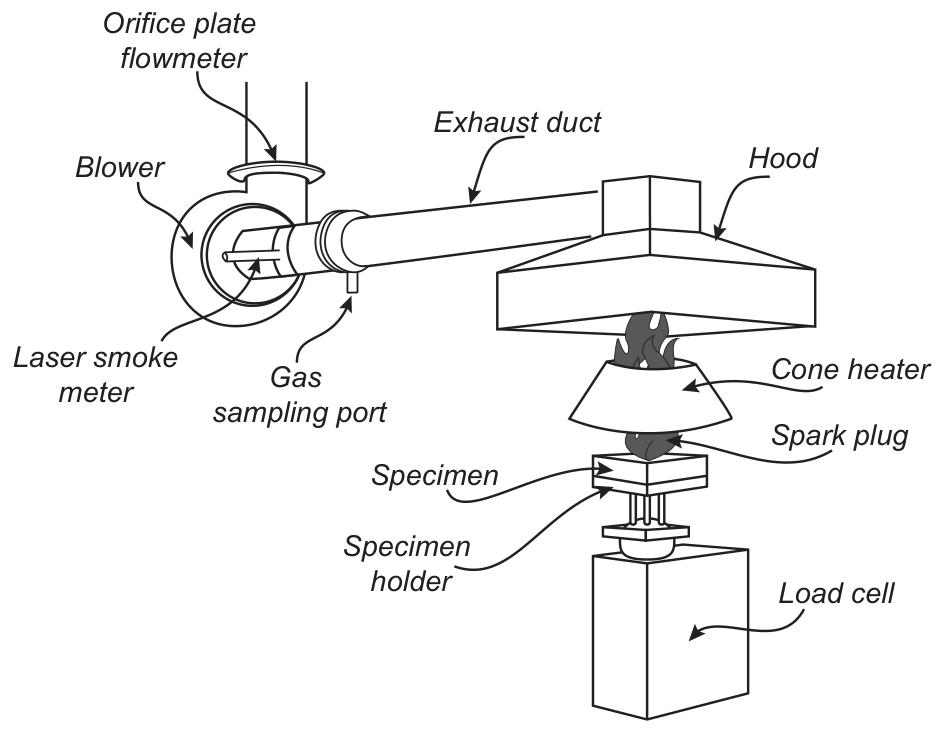
1. Cone Calorimeter (ISO 5660-1 / AS/NZS 3837)
The foundational small-scale testing instrument for wood ignition analysis, heat release rate (HRR), smoke production, mass loss and combustion toxic yield measurements. Key data outputs (peak HRR, total heat released, time to ignition) support:
- Japanese non-combustible / quasi non-combustible / fire-retardant material grading
- Australian & New Zealand flashover prediction for ISO 9705 Room/Corner tests
- Pre-screening of FRT wood before costly large-scale testing
- Pyrolysis characteristic analysis for softwood and hardwood speciesThe rig accommodates standard 100×100 mm wood specimens with adjustable radiant heat flux (0–100 kW/m²) and built-in laser smoke detection, load cell and gas sampling for O₂, CO, CO₂ analysis.
2. SBI Single Burning Item Test Rig (EN 13823)
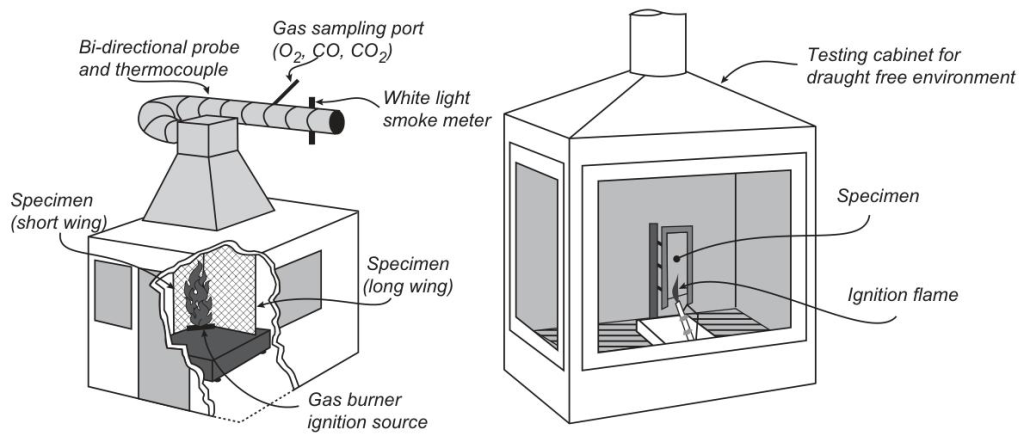
Mandatory equipment for European Euroclass (A1–F) classification of wall/ceiling wood linings. The corner test setup holds 1.5 m tall dual wood specimens exposed to a 30 kW propane flame for 20 minutes, measuring FIGRA fire growth rate, SMOGRA smoke growth, lateral flame spread and flaming droplet generation. All untreated solid timber over 9 mm thick achieves Euroclass D; properly impregnated FRT wood can reach Euroclass B/C.
3. ISO 9705 Room/Corner Full-Scale Test Chamber
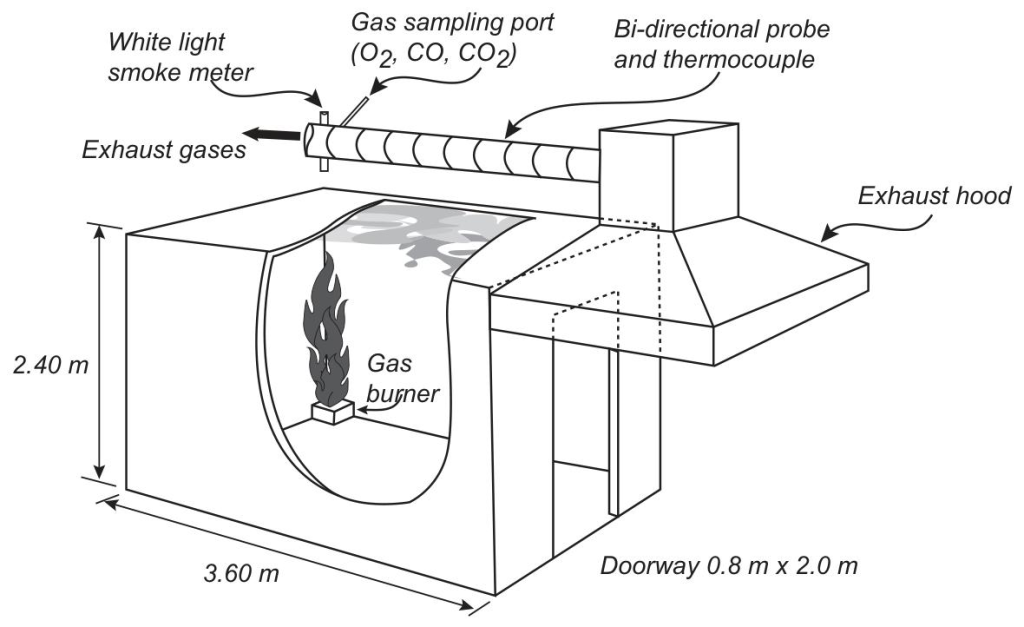
Global reference large-scale test for Australia NCC, NZBC and European fire classification. The 3.6 m × 2.4 m × 2.4 m test room lines walls/ceilings with full-size wood panels, exposed sequentially to 100 kW and 300 kW burner loads over 20 minutes. Critical metrics include flashover time and total smoke output, which directly assign Australian Group 1–4 ratings. FRT plywood delays or eliminates flashover within the 20-minute test window, while untreated timber reaches flashover rapidly.
4. Regional Market Specialized Test Equipment
North America Compliance
- ASTM E84 Steiner Tunnel: Calculates Flame Spread Index (FSI) and Smoke Developed Index (SDI) for US Class A/B/C interior wood finishes; extended ASTM E2768 version for FRT wood 30-minute endurance testing
- NFPA 286 Room Test: Alternative large-scale chamber for Class A lining qualification
- NFPA 285 Façade Test: Two-story wall rig for mass timber exterior cladding fire propagation assessment
- ASTM E108 Roof Test: Four-mode rig for wood shingle/roof covering Class A/B/C fire grading
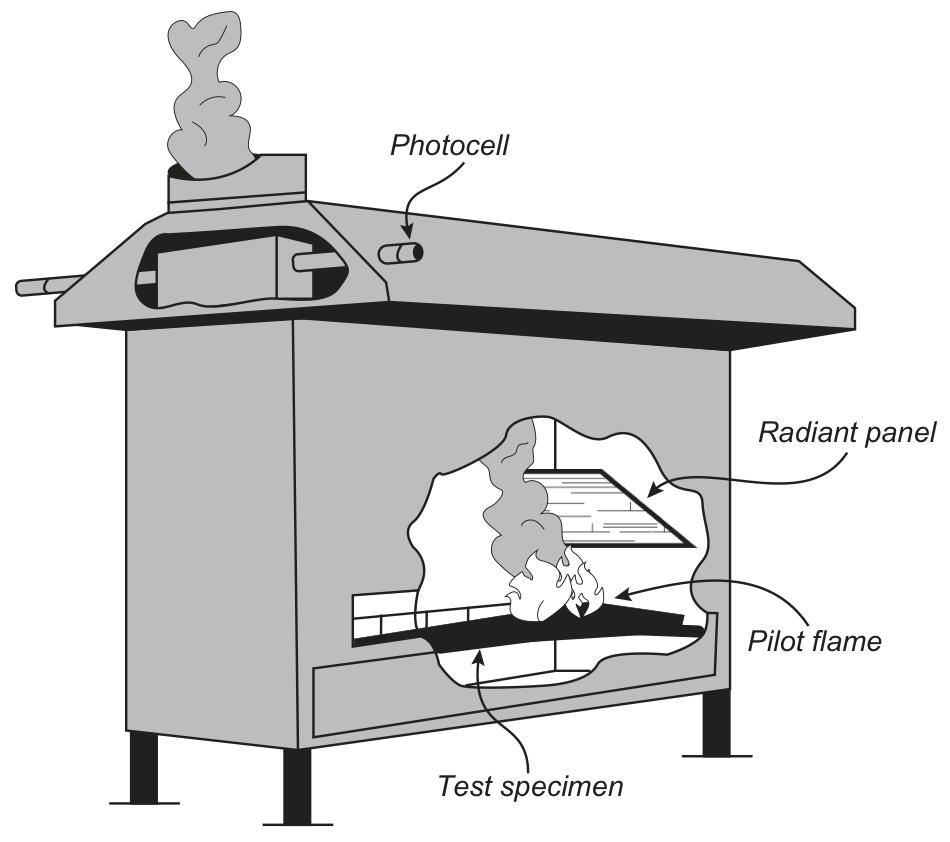
European Flooring Radiant Panel (EN ISO 9239-1)
Dedicated flooring tester measuring critical heat flux (CHF) and smoke development rate (SDR) for wood floor Euroclass Bfl–Efl classification, required for EU construction permits.
Australia & New Zealand Bushfire & Building Tests
- AS/NZS 1530.3 four-index tester (Ignitability, Flame Propagation, Heat Evolved, Smoke Developed)
- AS 1530.8.1 radiant heat rig for BAL bushfire classification of exterior timber cladding
Japanese Standard Test Hardware
ISO/TS 17431 reduced-scale model box matching JIS A fire grading criteria for interior wood finishes.
5. Full-Scale Façade Test Rigs
Modular corner and single-wall test frames complying with BS 8414, CAN/ULC-S134, ISO 13785 and national European façade standards, to evaluate vertical flame spread on multi-story timber exterior cladding systems.
Key Advantages of the Unified Wood Fire Test System
- Modular & Scalable ConfigurationCustomers select individual rigs or a fully integrated lab line based on testing volume: small R&D labs can start with only a Cone Calorimeter, while third-party certification facilities add SBI, Room/Corner and façade rigs as demand grows. All equipment shares a unified cloud control platform for synchronized data logging.
- Comprehensive Wood Material CompatibilityTest all mainstream wood construction products: sawn softwood/hardwood, MDF, OSB, particleboard, plywood, cross-laminated timber (CLT), glulam, thermal-modified wood, acetylated/furfurylated timber, and fire-retardant treated wood with vacuum-pressure impregnation or intumescent coatings. The system also supports durability pre-testing per ASTM D2898 accelerated weathering before fire assessment for exterior timber.
- One-Step Global Code ComplianceA single test setup generates certified data accepted across all major regions:
- Europe: EN 13501-1 Euroclass grading
- US & Canada: ASTM, NFPA, CAN/ULC surface burning ratings
- Australia / New Zealand: NCC/NZBC Group classification & BAL bushfire ratings
- Japan: JIS non-combustible/quasi non-combustible certification
- Intelligent Automated Test SoftwareCloud-connected control system stores pre-programmed test recipes for every standard, auto-calculates classification indices (FIGRA, FSI, SMOGRA, CHF) and generates audit-ready test reports with raw calorimetry, smoke and flame spread data. Multi-user permission levels separate lab operators, R&D engineers and third-party auditors.
- FRT Wood Durability Test CompatibilitySupport pre-weathering cycles per EN 16755 DRF classes (INT1/INT2/EXT) to verify long-term fire performance of exterior FRT timber, solving the industry challenge of flame retardant leaching under outdoor exposure.
Target End Users
- Mass timber manufacturers (CLT, glulam, structural plywood)
- Fire retardant chemical producers & wood treatment factories
- Independent third-party fire certification laboratories
- Architectural material R&D institutes & university timber engineering departments
- Import/export wood panel and façade cladding suppliers
- Bushfire construction compliance testing facilities in Australia & New Zealand
Industry Insight: Regional Wood Fire Classification Comparison
Untreated solid timber universally achieves mid-tier fire grades globally, while fire-retardant treatment upgrades performance dramatically:
- US: Untreated wood = Class B/C; FRT wood ≤25 FSI = Class A
- Europe: Untreated wood = Euroclass D; premium FRT wood = Euroclass B/C
- Australia/NZ: Untreated wood = Group 3; high-performance FRT wood = Group 1/2
- Japan: Only treated timber meets fire-retardant or quasi non-combustible standards
Testing data from the system quantifies critical fire metrics including ignition temperature (300–310°C for hardwood, 350–365°C for dry softwood), peak heat release rate, and smoke yield—confirming wood produces far less toxic CO and soot than plastic building materials under well-ventilated fire conditions.
About Our Fire Test Equipment Division
We specialize in designing, manufacturing and calibrating full-spectrum construction reaction-to-fire testing instruments for global markets. Our product portfolio covers cable flame testers, plastic pipe hydrostatic pressure systems and complete timber fire test lines, fully aligned with Industry 4.0 IoT data integration and global safety standard updates. All equipment includes factory calibration, on-site installation and multi-standard training for lab technicians.
For datasheets, custom lab layout design and quotation requests, visit our official website or submit an inquiry via the contact form.