
NBS Technical Note 757 Explains Foundational Smoke Density Chamber Method for Global Building Material Fire Safety Testing
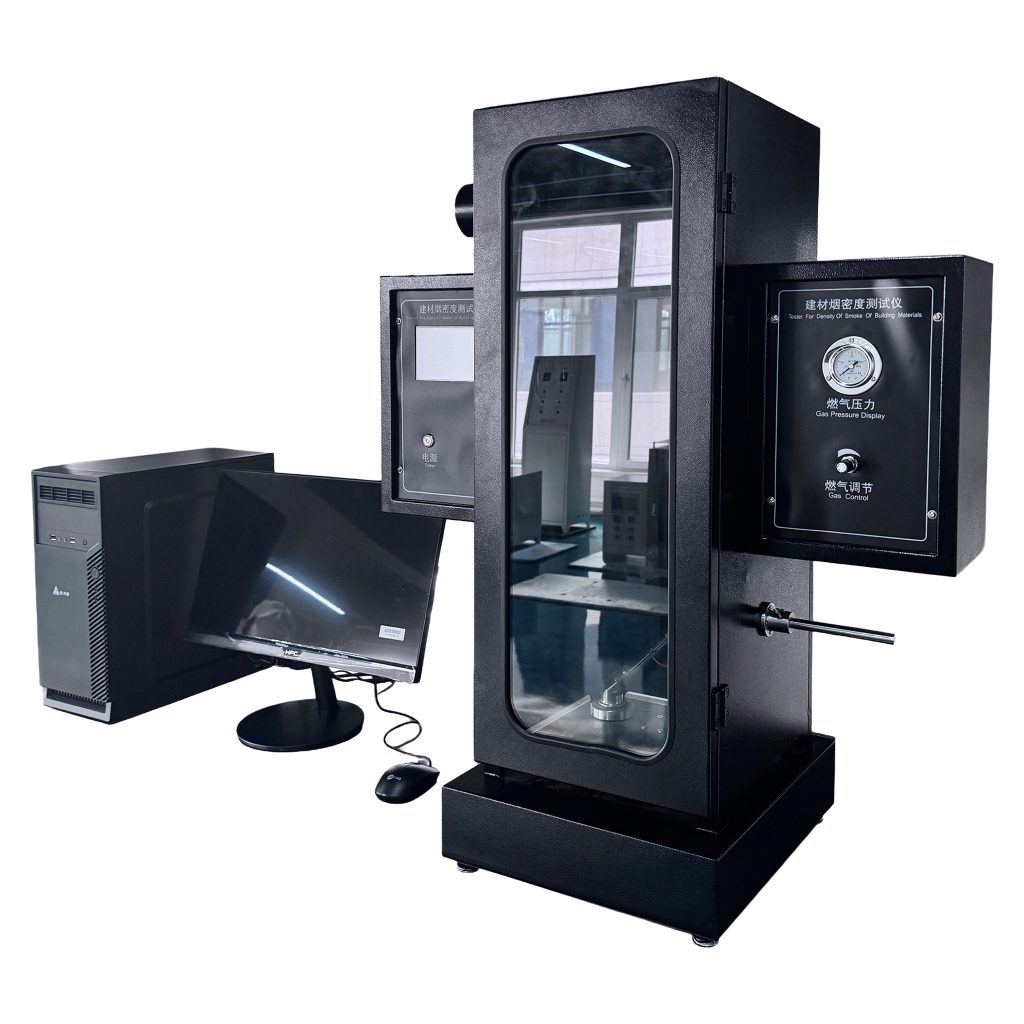
Authored by T.G. Lee of the NBS Center for Building Technology, the 20-page government publication solved a critical industry gap: prior to 1966, no standardized quantitative lab test existed to measure smoke obscuration, the leading cause of fire fatalities via smoke inhalation, disorientation and blocked building evacuation routes. As plastic coatings, foams and composite materials grew ubiquitous in construction, uncontrolled smoke output became a major unregulated fire risk—this chamber test created repeatable, comparable smoke performance data for material selection and building design.
The Origin & Core Design of the NBS Smoke Density Chamber
Developed in 1966 by NBS Fire Research Section with Federal Housing Administration backing, the closed 18 ft³ smoke chamber was engineered to replicate two real-world fire exposure modes for 3”×3” vertical specimens (max 1-inch thickness):
- Non-Flaming (Smoldering) Exposure: Radiant heat-only heating without open flame
- Flaming Exposure: Radiant heat + uniform burner flame impingement on the sample base
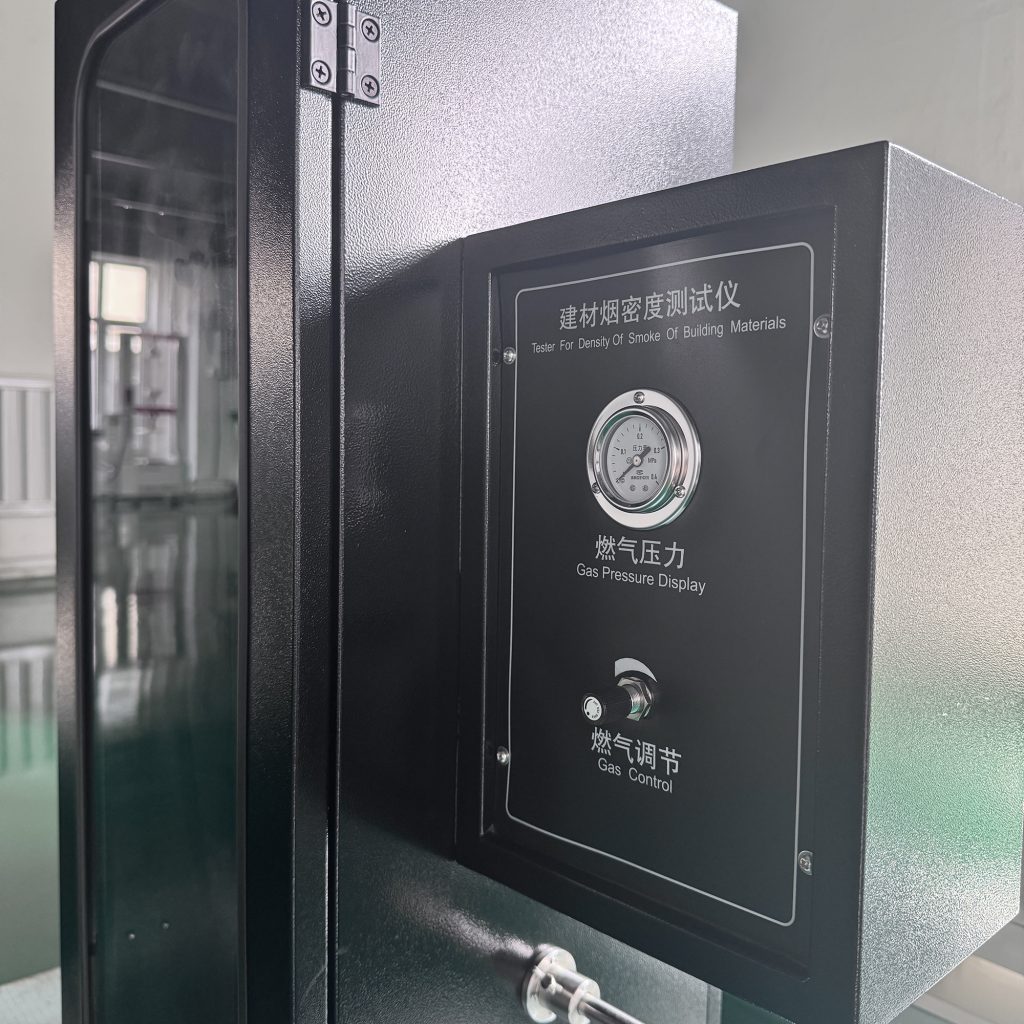
A built-in photoelectric sensor measures light beam attenuation through trapped smoke, calculating Maximum Specific Optical Density (Dₘ) via the Beer-Lambert Law—the universal metric for smoke opacity. The test apparatus delivers continuous, high-resolution smoke readings from 0 to 800 Dₘ units, covering all common construction substrates.
Interlaboratory round-robin testing across 22 independent labs (AMINCO commercial chambers + custom NBS-style rigs) confirmed exceptional reliability: median test reproducibility between facilities stood at just 8%, with standardized NBS reference materials available for regular equipment calibration.
Key Industry Breakthrough: The “Smoke Load” Design Concept
One of TN 757’s most transformative contributions is the introduction of the smoke load engineering metric, parallel to the established “fire load” heat release calculation.
- Fire load: Total heat energy released by combustible materials in a compartment
- Smoke load: Total smoke opacity potential from wall, ceiling and finish materials, calculated using Dₘ test values multiplied by material surface area
Engineers can use the formula \(D/L = D_m × A / V\) to predict real-world visibility loss inside any room, building corridor or high-rise shaft:
- \(D/L\): Smoke optical density per foot of viewing distance
- \(D_m\): Max specific optical density from chamber testing
- A: Total smoke-generating material surface area
- V: Total compartment volume
The paper includes a practical visibility calculation example: a 3,200 ft³ room lined with material scoring Dₘ=100 creates smoke density limiting exit sign visibility to only 3.5 feet without ventilation dilution—demonstrating how low-smoke materials drastically improve occupant escape windows during fires.
Standardized Smoke Data for Common Building Materials
NBS TN 757 published benchmark Dₘ (max smoke) values under flaming and non-flaming conditions for dozens of widely used construction products, enabling direct material comparison:
Wall & Ceiling Products
- Gypsum board: 35 (non-flaming) / 10 (flaming)
- Plywood: 305 (non-flaming) / 45 (flaming)
- PVC veneer gypsum panel: 109 (non-flaming) / 110 (flaming)
Flooring & Wood
- Red oak hardwood: 505 (non-flaming) / 300 (flaming)
- Elm solid wood: Rises with increased thickness
Plastics & Composites
- Rigid polystyrene foam: 25 (non-flaming) / 390 (flaming)
- Glass-reinforced polyester: 420 (non-flaming) / 720 (flaming)
Insulation
- Fiberglass insulation: 25 both exposure modes
Critical material behavior pattern identified: Natural wood generates heavier smoke under smoldering non-flaming conditions, while most plastic formulations produce far denser smoke during open flaming combustion.
Link to Modern Global ASTM Smoke Standards
The original NBS chamber protocol became the technical foundation for two mandatory North American building test standards referenced in IBC, NFPA, Miami-Dade FBC and military codes:
- ASTM E662: Specific Optical Density of Smoke from Solid Materials (vertical 1” max specimens, dual flaming/non-flaming test matching NBS TN 757 exposure cycles)
- ASTM D2843: Smoke Density of Burning Plastics (4-minute flame exposure, smoke obscuration index for light-transmitting plastic building components)
Over 70 commercial smoke density chambers were deployed across U.S. and international labs within a decade of the report’s release, including facilities from UL, Intertek, Southwest Research Institute and American Instrument Company (AMINCO). Today every certified fire testing laboratory operates NBS-compliant smoke chambers for code compliance submissions.
Practical Use Cases for Architects, Code Officials & Manufacturers
- Low-Smoke Material Specification: Select low-Dₘ substrates for exit stairwells, hospital nursing homes, schools and high-rise public occupancies where visibility loss poses extreme risk.
- Building Smoke Ventilation Design: Calculate smoke load to size pressurization shafts, exhaust fans and automatic smoke vent systems for high-rise fire safety engineering.
- Code Compliance Validation: Generate standardized Dₘ test data required for IBC, Florida HVHZ, NFPA 130 and MIL-STD marine material approvals.
- Flame Retardant R&D: Compare smoke output of modified plastics, treated timber and composite panels to balance flammability reduction and smoke hazard control.
The publication clarifies key test limitations: Dₘ results are material-thickness specific and cannot be directly extrapolated to all real-world fire ventilation conditions, requiring full-scale compartment modeling for complex building designs.
Who Relies On NBS TN 757 Guidance?
- Fire safety testing laboratories running ASTM E662 / D2843 smoke density chambers
- Architectural and fire protection engineering firms designing smoke control systems
- Municipal building code officials and fire service departments
- Plastic, wood panel and insulation material manufacturers
- Military, transit and marine product compliance teams
- University fire science research laboratories
About the Source Document
NBS Technical Note 757 was issued January 1973 by the U.S. Department of Commerce National Bureau of Standards (predecessor to today’s NIST National Institute of Standards and Technology). The public-domain technical report remains the definitive foundational reference for smoke density chamber testing methodology, cited in all modern ASTM fire standard technical appendices.