
How Advances in DSC Instrumentation Improve Accuracy and Efficiency
Science continuously develops new knowledge while laboratory equipment becomes more intelligent each year — and Differential Scanning Calorimetry (DSC) is an excellent demonstration of this principle.
Scientists use DSC to investigate material behavior during temperature fluctuations — probing properties such as melting points, crystallization behavior and thermal stability. The differential scanning calorimetry method serves industries including pharmaceuticals, polymers, food processing and materials research, and contemporary instrumentation updates have made DSC testing more efficient, more precise and easier to conduct.
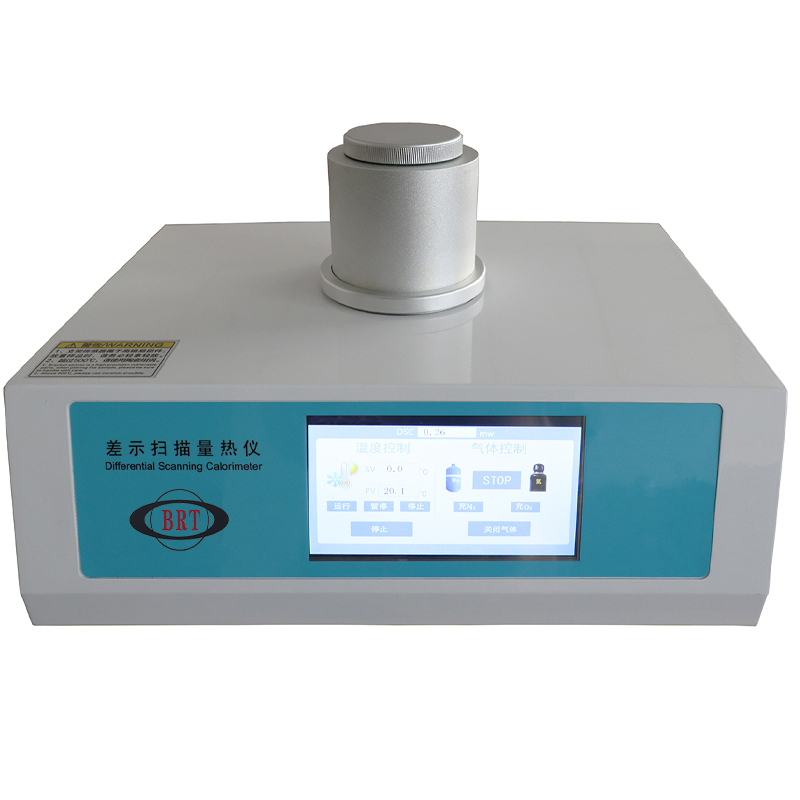
As a professional manufacturer of thermal analysis instruments, Shenyang Baoruitong Automation Equipment Co., Ltd. (BRT) presents this guide to modern DSC technology and its BRT-500B DSC Analyzer — engineered to deliver the accuracy, speed and automation today’s laboratories demand.
What Is Differential Scanning Calorimetry?
Differential scanning calorimetry (DSC) is a thermal analysis method that determines a material’s heat absorption and heat release properties across various temperature ranges. It helps materials scientists understand critical properties such as:
- Glass transition temperature
- Melting temperature and its thermal effect
- Crystallization and cold crystallization behavior
- Oxidation induction period (isothermal OIT and dynamic OIT)
- Curing / cross-linking reactions and product stability
These measurements are indispensable for quality inspection, product development and research in pharmaceuticals, chemical manufacturing, food processing and materials science.
How Modern DSC Instrumentation Improves Accuracy and Efficiency
Smarter sensors for better accuracy
Modern DSC systems’ most important improvement is the implementation of high-sensitivity sensors that measure even the tiniest temperature variations in a sample. Where older instruments failed to detect minor thermal signals, current sensors measure extremely low heat emissions with exceptional accuracy. In pharmaceutical research, for example, scientists use modern DSC sensors to measure tiny thermal variations and validate the stability of stored and produced medications.
The BRT-500B delivers this level of sensitivity with a DSC resolution of 0.01 mW (sensitivity 0.1 mW), a temperature resolution of 0.01 °C, and a dual temperature probe design — one probe on the furnace wall for PID control, one at the sample position measuring the sample’s real temperature — for excellent test repeatability.
Faster heating and cooling systems
Advanced temperature control systems enable faster sample heating and cooling while maintaining correct temperature measurement, so researchers finish tests more quickly and process more samples per day. A polymer manufacturer can conduct various thermal tests on plastic materials throughout the day, increasing operational efficiency and accelerating new product development.
The BRT-500B supports heating rates of 0.1–80 °C/min and cooling rates of 0.1–30 °C/min, with heating, constant-temperature and cooling scan modes under fully automatic program control — covering the temperature program flexibility modern testing demands.
Improved automation and smart software
Modern DSC instruments use automation as their primary operational component, with intelligent software managing automated sample processing and data analysis — reducing manual effort and the chance of human mistakes. Food science laboratories, for example, use automated DSC systems to analyze how fats in chocolate and butter melt, running several samples overnight and receiving complete results by morning.
The BRT-500B combines a 7-inch LCD touch screen with full parameter display (set temperature, sample temperature, differential thermal signal and switch states), automatic DSC range switching according to data size, USB data transmission with self-recovery connection, and software compatible with Windows 7/8/10/11 — with an optional data network remote transmission function to upload test results to a designated server.
Better calibration and stability
Automatic calibration capabilities and enhanced thermal stability keep temperature measurements consistent throughout all testing procedures. The BRT-500B ships with standard thermal analysis reference materials (indium, tin, zinc) so users can calibrate temperature and enthalpy themselves, and its fully enclosed furnace structure avoids contamination for reliable, low-maintenance operation.
Compact and user-friendly designs
Modern DSC systems are designed with intuitive interfaces and compact structures so laboratories can operate the equipment without advanced technical expertise. The BRT-500B’s industrial-grade touch interface, simple sample loading (standard uncovered aluminum crucibles, Φ6.5 × 3 mm) and low-maintenance enclosed furnace make daily operation straightforward for any lab technician.
BRT-500B: Key Specifications
- Temperature range: room temperature to 500 °C; temperature resolution 0.01 °C
- Heating rate 0.1–80 °C/min; cooling rate 0.1–30 °C/min; constant temperature up to 500 °C
- DSC range: 0–±500 mW with automatic range switching; resolution 0.01 mW, sensitivity 0.1 mW
- Dual-gas atmosphere control: nitrogen and oxygen with automatic switching, flow rate 0–200 mL/min, pressure 0.2 MPa
- Standards: meets GB/T 19466.2 / ISO 11357-2 (glass transition), GB/T 19466.3 / ISO 11357-3 (melting and crystallization), GB/T 19466.6 / ISO 11357-6 (oxidation induction); optional specific heat capacity per GB/T 19466.4 / ISO 11357-4
- Output: USB interface, 7-inch LCD touch screen, computer and printer output; power 300 W
- Complete configuration: DSC host, 300 aluminum crucibles, standard samples (indium, tin, zinc), software, gas pipes and full documentation
Who Needs the BRT-500B?
- Polymer manufacturers — glass transition, melting, crystallization and OIT testing of plastic materials
- Pharmaceutical companies — drug stability and compatibility studies
- Food processing laboratories — fat melting behavior analysis (chocolate, butter, edible oils)
- Materials research institutes and universities — thermal characterization of new materials
- Quality control laboratories — incoming material and product thermal testing per ISO 11357
FAQ
What is Differential Scanning Calorimetry (DSC)? Differential scanning calorimetry (DSC) is a thermal analysis method that determines a material’s heat absorption and heat release properties across various temperature ranges, measuring glass transition, melting, crystallization, oxidation induction and other thermal indicators.
Why is DSC important in research? DSC helps scientists understand critical material properties like melting point, crystallization behavior and thermal stability — essential for quality inspection, product development and research in pharmaceuticals, polymers, food processing and materials science.
How do modern DSC instruments improve accuracy? Contemporary DSC technology achieves improved accuracy through a combination of high-sensitivity sensors, advanced temperature management systems and automatic calibration procedures. The BRT-500B adds a dual temperature probe design with 0.01 mW DSC resolution and 0.01 °C temperature resolution.
Which industries commonly use DSC? Pharmaceuticals, chemical manufacturing, food processing, polymer production and materials science — anywhere precise thermal analysis is needed for product development, quality inspection and research.
Which standards does the BRT-500B comply with? GB/T 19466.2 / ISO 11357-2 (glass transition temperature), GB/T 19466.3 / ISO 11357-3 (melting and crystallization temperatures and enthalpies), and GB/T 19466.6 / ISO 11357-6 (oxidation induction), with optional specific heat capacity per GB/T 19466.4 / ISO 11357-4.
Get a Quote
Need a reliable DSC analyzer for polymer, pharmaceutical or food thermal analysis? Contact Baoruitong Automation Equipment Co., Ltd. today for the BRT-500B datasheet, test procedure guidance and a customized quotation. Every BRT instrument is backed by a 1-year warranty, installation guidance, operation training and long-term after-sales support.
Email: info@brt-test.com | WhatsApp: +86 15604057553 | Web: www.brt-test.com