
Horizontal vs Vertical Flame Test Methods Explained: Which One Does Your Product Need?
Are your products truly fire-ready?
Guessing how materials handle a spark is a risk quality teams can’t afford. Whether a product is a car cabin fabric, a plastic appliance housing or a cable bundle in a data center, its fire behavior is determined by standardized flammability testing — and the single most important decision in that testing is which flame test method to use: horizontal or vertical.
As a professional manufacturer of flammability testing instruments, Baoruitong Automation Equipment Co., Ltd. (BRT) presents this guide to horizontal vs vertical flame test methods — what each setup measures, when to use it, and how to choose the right flammability testing equipment for your laboratory.
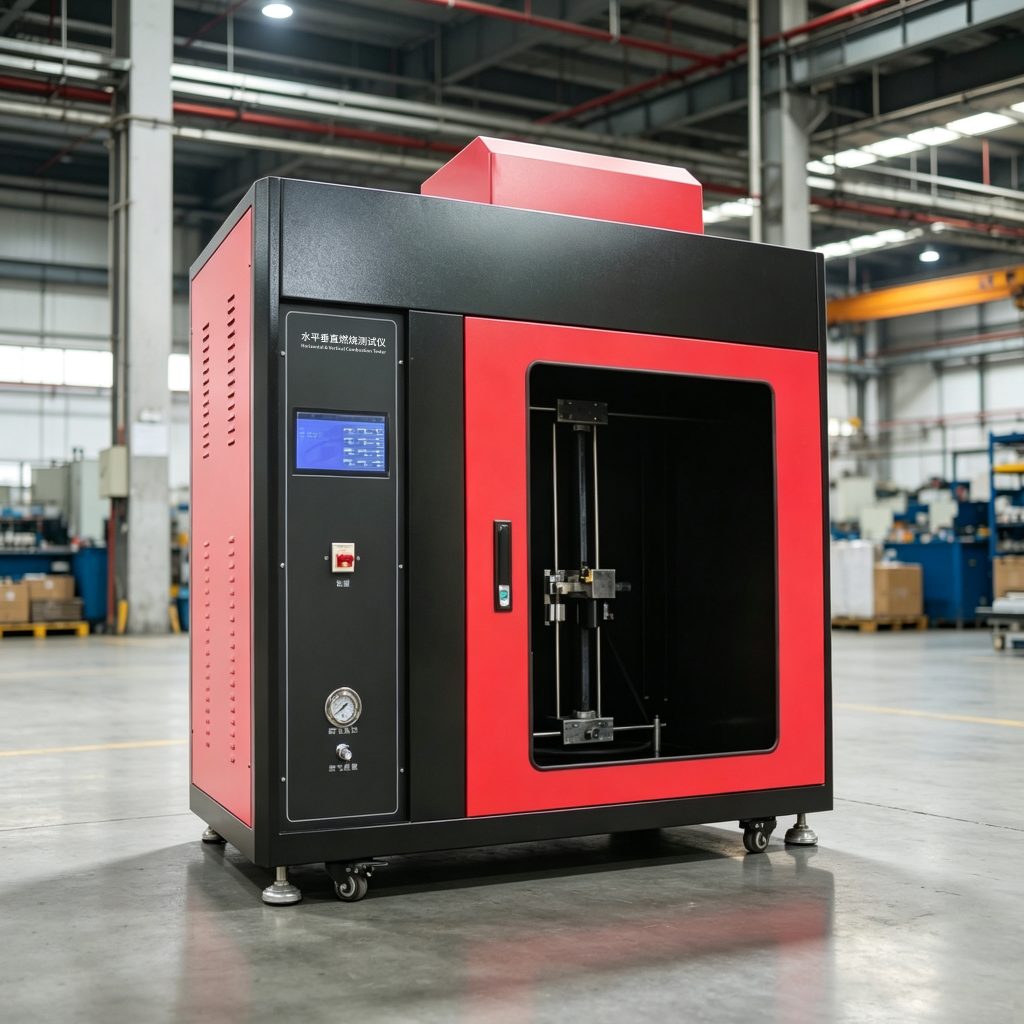
The Principles of Horizontal Flame Testing
The horizontal flame test is built to see how a sample acts when it gets hit by a relatively small, low-heat fire source. For this setup, the material is held perfectly level, and a flame is touched to one side.
What the test measures: The main point is to see how fast the fire moves across the material and whether it stops burning on its own before it hits a specific marker. The whole setup simulates a scenario where a product might catch fire from a dropped match or a tiny, localized heat source.
Everyday manufacturing scenarios: While this level-style check gives a solid starting point for basic safety, it is often thought of as the “baseline requirement.” Typical applications include checking car cabin fabrics (per FMVSS 302 / ISO 3795) or testing the plastic outer shell of a standard desktop calculator. If a hot wire briefly grazes it, this flat-orientation check simply proves the material won’t instantly turn into a raging bonfire. Usually, items that pass here have a slow crawl of fire but might not be the right fit for high-risk spots where a fire could take off with a lot of momentum.
The Principles of Vertical Flame Testing
The vertical flame test is a much tougher challenge for any material. In this setup, the sample is clamped straight up and down, and the fire is applied directly to the bottom edge.
What the test measures: Since heat naturally wants to climb, this upright setup makes the fire spread a whole lot faster. The check doesn’t just look at how long the material stays on fire after the burner is pulled away — it also watches for those small droplets of melting material that could drip down and start new fires in other spots.
Everyday manufacturing scenarios: From a safety angle, the vertical setup is the real-deal test of whether a material can handle the heat when things get difficult. Picture a massive data center server rack loaded with wiring, or the overhead panels inside a passenger jet — if an electrical fault throws serious sparks, those materials are required to choke out the fire right then and there. Materials that pass these tough vertical checks are better at putting themselves out and are usually a must-have for power distribution boxes, aircraft cabins and environments where fire is a serious concern.
The Big Differences: Vertical vs Horizontal Flame Testing
| Feature | Horizontal Flame Testing | Vertical Flame Testing |
|---|---|---|
| Specimen orientation | Laying perfectly level | Straight up and down |
| Primary metric | Speed of the flame spread | Time to extinguish and dripping behavior |
| Severity level | Lower (simulates minor ignition) | Higher (simulates rapid fire growth) |
| The drip factor | Usually not a major focus | A massive deal for the final grade |
| Everyday gear you’d test | Plastic computer mice, decorative desk trim | Heavy-duty server racks, aircraft interior panels |
Reading the Rulebook: UL 94 Flammability Test Standard
Whenever professionals talk about a major flammability test standard for plastics, UL 94 is the absolute center of attention. Whether you are aiming for the baseline HB (Horizontal Burn) rating or pushing for the incredibly strict V-0 (Vertical Burn) grade, hitting the exact criteria is what separates top-tier materials from the rest — and it all starts with choosing the right test orientation.
Why Getting Your Samples Ready Is Everything
It doesn’t matter if you’re doing a horizontal or vertical flame test — the accuracy of your data depends entirely on how you prepare your samples. In expert practice, letting samples sit and stabilize is the step that gets skipped way too often. Your lab needs to lock down two critical phases:
- Precise sizing: cut or mold pieces to the exact dimensions the standard requires
- Environmental conditioning: let samples sit in a controlled room with a specific temperature and moisture level before testing
You won’t get the same result twice without being careful with conditioning — even a little humidity can lead to a strange pass or a total failure.
Choosing Your Gear: BRT’s Flammability Testing Solutions
Choosing a specific horizontal vs vertical flame tester really comes down to the exact regulations your products have to satisfy. Three approaches exist:
- Dedicated horizontal testers — for shops strictly dealing with level-burn requirements
- Specialized vertical testers — for operations producing high-risk components that must pass tough upright standards
- Multi-purpose combo machines — for a growing laboratory, almost always a better budget decision than buying two separate units; one machine that can switch between both burning orientations is a total win for efficiency
BRT’s flammability testing equipment line is built around this choice:
- Plastic foam vertical & horizontal burning tester — designed per GB/T 8332 and GB/T 8333, this combo-style unit lets labs switch between vertical and horizontal burning tests for foam and plastic materials while keeping flame application and timing under automatic control
- Automatic oxygen index tester — per GB/T 2406, measuring the minimum oxygen concentration required to sustain combustion, a key complement to flame classification testing
- Smoke density tester — measuring smoke obscuration of burning materials, critical for establishing safe evacuation paths, alongside the flame test methods described above
All BRT instruments are designed to produce the controlled, repeatable data that certification filings require — turning “is this material fire-ready” into a measurable, reviewable result.
FAQ
What is the main difference between horizontal and vertical flame testing? The primary difference is the position of the material and the specific fire risks being evaluated. A horizontal flame test measures the speed of fire spread across a flat surface as a baseline safety check, while a vertical flame test clamps the material upright to measure self-extinguishing times and check for dangerous flaming drips.
Which flammability test method is considered stricter? Vertical flame testing is universally considered the stricter and more challenging evaluation. Because heat naturally rises, the upright orientation forces faster fire spread and aggressively tests whether the material can quickly put itself out — which is why high-risk environments like aircraft cabins and data centers require materials that pass vertical tests.
Why is exact sample preparation crucial for flammability testing? Precision in sample preparation prevents inconsistent data and false failures. Standards such as UL 94 require exact sample sizing and environmental conditioning, because varying moisture levels or incorrect dimensions can artificially alter a material’s natural burning characteristics.
Can a single machine perform both horizontal and vertical flame test parameters? Yes. Modern combo flammability chambers allow technicians to switch between horizontal and vertical test setups in a single footprint while keeping flame height and gas flow precisely controlled — usually the smartest investment for a growing laboratory.
Which products typically require horizontal flame testing? Horizontal testing is typically reserved for everyday consumer goods and lower-risk materials — decorative trim, basic appliance housings and car cabin fabrics, the latter often tested per FMVSS 302 / ISO 3795.
Which products typically require vertical flame testing? High-risk components such as cable bundles in data centers, aircraft interior panels, power distribution boxes and flame-retardant plastics targeting UL 94 V-0 ratings — anywhere that self-extinguishing behavior and no flaming drips are safety-critical.
Get a Quote
Need a reliable flammability tester for horizontal or vertical flame testing? Contact Baoruitong Automation Equipment Co., Ltd. today for datasheets, test procedure guidance and a customized quotation. Every BRT instrument is backed by a 1-year warranty, installation guidance, operation training and long-term after-sales support.
Email: info@brt-test.com | WhatsApp: +86 15604057553 | Web: www.brt-test.com