
Vertical Fire Resistance Furnace: How Building Elements Earn Their Fire Rating
When a wall claims a 120-minute fire rating, who holds it to that promise?
In a fire, the walls, partitions, doors and curtain walls around us are not decoration — they are the barriers that contain the blaze and buy occupants time to escape. But a fire rating printed on a component is only as credible as the test that produced it. Behind every fire-resistance rating stands the same instrument: a vertical fire resistance furnace, designed to evaluate the fire resistance performance of vertical building elements under controlled high-temperature conditions by simulating real fire exposure.
As a professional manufacturer of fire testing instruments, Baoruitong Automation Equipment Co., Ltd. (BRT) presents this guide to vertical building element fire testing and its NH-XL Vertical Fire Resistance Test Furnace — engineered to assess the integrity, insulation performance and stability of construction components during fire conditions.
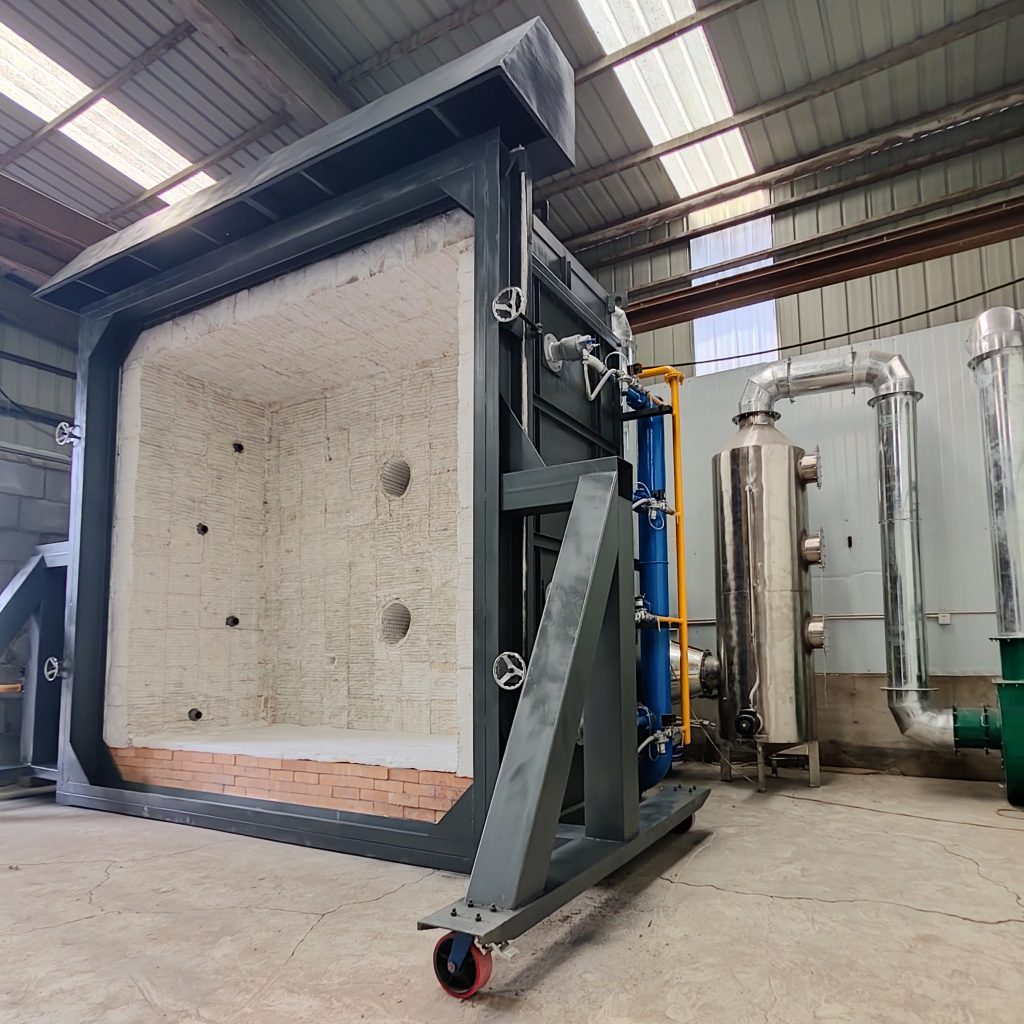
What Does a Vertical Fire Resistance Furnace Do?
The vertical fire resistance furnace simulates standard fire exposure temperature conditions on vertical building elements, evaluating three core performance dimensions:
- Integrity — whether the element develops cracks, openings or penetrations that let flames or hot gases through
- Insulation — whether the unexposed face stays below the allowable temperature rise
- Stability — whether the element maintains its load-bearing or separating function under fire exposure
The result is a fire rating evaluation that determines how long a construction component can perform its function in a fire — measured in minutes, and backed by controlled, repeatable testing conditions.
Where Vertical Fire Resistance Testing Is Used
- Fire-resistant walls and partitions — separating fire compartments in buildings
- Building doors and panels — fire doors, fire windows and cladding panels
- Curtain wall and structural components — facade systems and load-bearing elements
- Construction material research — fire dynamics and material performance studies
- Fire testing laboratories and certification institutions — accredited fire rating certification
The International Standards Framework
A vertical fire resistance testing system of this type is commonly referenced against the international framework of fire resistance test standards:
- ISO 834-1 — Fire-resistance tests — Elements of building construction — General requirements
- EN 1363-1 — Fire resistance tests — General requirements
- EN 1364 series — Fire resistance tests for non-loadbearing elements
- EN 1365 series — Fire resistance tests for loadbearing elements
- ASTM E119 — Fire tests of building construction and materials
- GB/T 9978 series — Fire-resistance tests for building elements
For manufacturers selling into international markets, a furnace that supports this standards framework means one investment can serve multiple certification requirements.
BRT’s Solution: NH-XL Vertical Fire Resistance Test Furnace
The BRT NH-XL is a vertical comprehensive fire-resistance test furnace designed from the ground up to meet these demanding standards.
High-temperature furnace construction
- Metal frame with a baked-enamel steel-plate outer shell; furnace body and roof built on a lightweight high-alumina fiber suspended structure lined with zirconium-fiber wool block modules, with the same module construction on the floor
- Maximum operating temperature of 1300 °C, reproducing the standard fire temperature curve with tight control
Precise, automated combustion control
- Runs on natural gas or LPG with 8 burners operating on proportional combustion
- Automatic furnace-pressure control and automatic temperature regulation
- The entire temperature curve is managed through a programmed sequence with computer-aided operation — barely requiring manual parameter adjustment
- Effective internal test space of 3.0 m × 3.0 m × 1.2 m, large enough for standard-sized fire partitions, doors, windows and valves; specimens mount externally for straightforward loading and unloading
Complete failure-mode judgment
- Covers both core failure modes: insulation failure (mean temperature rise on the unexposed face exceeding 140 °C, or any single point exceeding 180 °C) and integrity failure (cracking or penetration)
- Broad test coverage across fire partition walls, doors, windows, roller shutters, check valves and oil-fume exhaust dampers
Who Needs the NH-XL?
- Manufacturers of fire-protection building components — factory-gate quality control and certification preparation
- Third-party fire testing laboratories — where the precision of the furnace’s temperature curve and pressure control determines whether a test report can withstand review and regulatory audit
- Construction material research institutes and certification bodies — fire rating evaluation of walls, doors, panels, curtain walls and structural components
FAQ
What is a vertical fire resistance furnace? A vertical fire resistance furnace is a fire testing instrument that exposes vertical building elements — walls, partitions, doors, panels and curtain walls — to a controlled standard fire, evaluating their integrity, insulation and stability to determine a fire resistance rating.
Which standards apply to vertical building element fire testing? The international framework includes ISO 834-1 and EN 1363-1 (general requirements), EN 1364 series (non-loadbearing elements), EN 1365 series (loadbearing elements), ASTM E119 and the GB/T 9978 series.
What does “integrity and insulation” mean in fire resistance testing? Integrity refers to whether the element develops cracks or openings that let flames through; insulation refers to whether the unexposed face exceeds the allowable temperature rise (mean >140 °C or single point >180 °C in the NH-XL test criteria). Both are judged during the fire test.
How hot does the furnace get? The NH-XL reaches a maximum operating temperature of 1300 °C, reproducing the standard fire temperature curve with automatic temperature and furnace-pressure control.
Which elements can the NH-XL test? Fire partition walls, fire doors, fire windows, roller shutters, check valves and oil-fume exhaust dampers — with a test space of 3.0 m × 3.0 m × 1.2 m and external specimen mounting.
Get a Quote
Need a reliable vertical fire resistance furnace for building element fire rating testing? Contact Baoruitong Automation Equipment Co., Ltd. today for the NH-XL datasheet, test procedure guidance and a customized quotation. Every BRT instrument is backed by a 1-year warranty, installation guidance, operation training and long-term after-sales support.
Email: info@brt-test.com | WhatsApp: +86 15604057553 | Web: www.brt-test.com