
UL 94 Flammability Test Apparatus Supports Plastic Fire-Safety Evaluation for Electrical and Electronic Products
Plastic materials are widely used in electrical products, electronic devices, appliances, housings, components, and industrial equipment. Because plastic can respond differently to ignition and flame exposure, manufacturers and laboratories need a controlled method for evaluating material flammability and supporting fire-safety decisions.
Baoruitong Automation Equipment Co., Ltd. presents the UL 94 Flammability Test Apparatus, a laboratory testing solution designed to evaluate the flammability of plastic materials in vertical and horizontal orientations.
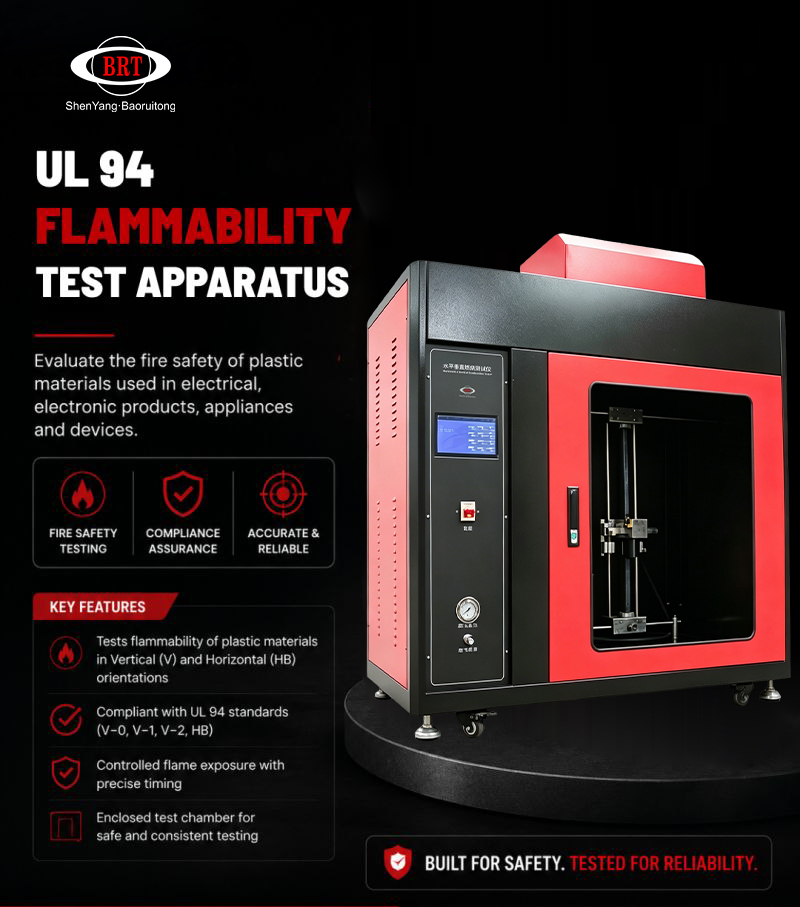
The product image highlights testing for the UL 94 classifications V-0, V-1, V-2, and HB, together with controlled flame exposure, precise timing, and an enclosed test chamber. These features make the apparatus relevant to electrical, electronic, appliance, and device manufacturers that need repeatable plastic flammability testing.
Why UL 94 Plastic Flammability Testing Matters
Plastic material fire behavior can influence product safety, enclosure design, component selection, and compliance preparation. A controlled flammability test helps users observe how a specimen responds to a defined flame exposure and compare materials under the selected test method.
UL 94-related testing can support evaluation of:
- Plastic material flammability
- Vertical burning behavior
- Horizontal burning behavior
- Flame persistence after ignition
- Burning and flame propagation behavior
- Material comparison
- Flame-retardant formulation development
- Electrical and electronic product safety review
- Appliance material quality control
- Product compliance preparation
The specific specimen requirements, flame application procedure, timing criteria, classification conditions, and reporting method should be confirmed from the applicable UL 94 test procedure and the official equipment documentation.
UL 94 Flammability Test Apparatus: Key Product Features
Vertical and Horizontal Plastic Flammability Testing
The apparatus is designed to test plastic materials in both vertical (V) and horizontal (HB) orientations. This allows laboratories to select the relevant test arrangement according to the material, product design, and applicable evaluation requirement.
Vertical and horizontal orientations provide different perspectives on the way a plastic specimen burns and how flame behavior develops relative to the specimen position. A dual-orientation testing solution can therefore support broader material screening and product-development workflows.
UL 94 V-0, V-1, V-2, and HB Evaluation Support
The product image lists the UL 94 classifications V-0, V-1, V-2, and HB. These classification terms are commonly used when discussing the flammability behavior of plastic materials under the relevant UL 94 test arrangements.
The apparatus provides a controlled test platform for gathering the observations required by the selected method. It does not automatically grant a material classification or certification. The final classification must be determined according to the applicable standard, specimen requirements, test procedure, and authorized evaluation process.
Controlled Flame Exposure
Controlled flame exposure is a central feature of the UL 94 testing workflow. The apparatus is designed to apply the flame to the plastic specimen under a defined test arrangement so that the operator can observe the specimen’s burning behavior.
A controlled ignition source helps laboratories compare different plastic materials and flame-retardant formulations using the same general test setup. Customers should confirm the applicable flame-source requirements and operating conditions before purchase.
Precise Timing for Repeatable Observation
The image highlights precise timing as one of the product features. Timing is important in flammability testing because burning duration, afterflame behavior, and other observations may be evaluated against method-specific criteria.
The apparatus is intended to help operators organize the flame-exposure and observation sequence more consistently. The exact timing function, resolution, and test procedure should be confirmed in the final technical documentation.
Enclosed Test Chamber
The UL 94 Flammability Test Apparatus uses an enclosed test chamber. An enclosed chamber helps create a defined testing space and supports safer, more consistent laboratory operation.
The chamber design also helps separate the test area from the surrounding workspace during flame exposure. Laboratories should still follow their own fire-safety procedures, ventilation requirements, operator training, and applicable laboratory regulations.
Plastic Materials and Product Applications
The UL 94 Flammability Test Apparatus can support material evaluation and quality-control activities for:
- Electrical product plastics
- Electronic device housings
- Appliance enclosures
- Plastic components
- Switches and connectors
- Consumer electronics materials
- Industrial equipment housings
- Polymer components
- Engineering plastics
- Flame-retardant plastics
- Plastic sheets and molded parts
- Insulating plastic materials
- Wire and cable-related plastic components
- Electrical enclosure materials
- Electronic product development
For manufacturers, UL 94 testing can support material selection, formulation comparison, flame-retardant development, supplier evaluation, and product safety documentation. For laboratories, the apparatus provides a dedicated platform for controlled plastic flammability testing.
Benefits for Electrical and Electronic Product Manufacturers
Fire-Safety Testing
The apparatus helps manufacturers organize a controlled test for plastic flammability. This can support early-stage material screening and product-development decisions.
Compliance Assurance Support
UL 94 test results can contribute to a broader product compliance process when the correct method and classification requirements are applied. The equipment supports testing; it does not replace certification or regulatory evaluation by an authorized organization.
Accurate and Reliable Testing Workflow
The image highlights accurate and reliable testing. A controlled flame, precise timing, vertical and horizontal orientations, and enclosed chamber can help laboratories structure a more consistent workflow.
Result quality also depends on specimen preparation, conditioning, equipment setup, operator procedure, calibration, and interpretation of the applicable requirements.
A Practical UL 94 Testing Workflow
A typical plastic flammability testing workflow may include:
- Identify the plastic material, component, or finished-product application.
- Confirm the applicable UL 94 test orientation and evaluation criteria.
- Prepare specimens according to the selected procedure.
- Position the specimen in the vertical or horizontal test arrangement.
- Set up the enclosed test chamber and controlled flame exposure.
- Apply the flame according to the applicable test procedure.
- Use the timing function to support consistent observation.
- Record burning behavior and relevant test observations.
- Review the results against the applicable UL 94 classification requirements.
The exact specimen dimensions, flame exposure time, number of specimens, conditioning requirements, and classification rules should be obtained from the official test standard and confirmed with the equipment supplier.
Why Enclosed and Controlled Testing Improves Laboratory Operations
Open or improvised flame testing can make it more difficult to control the test environment and repeat the same operating sequence. A dedicated UL 94 flammability test apparatus provides a defined test chamber and a structured arrangement for flame exposure and observation.
For laboratories, this can help organize routine testing, material comparison, and product-development work. For manufacturers, it can provide a clearer process for reviewing plastic materials before they are used in electrical, electronic, appliance, or industrial products.
Baoruitong Service and Warranty Support
Baoruitong Automation Equipment Co., Ltd. supplies laboratory testing equipment and material-performance testing solutions for industrial, research, quality-control, and product-development applications.
The company can provide product consultation, application communication, test-method planning, configuration guidance, quotation support, and after-sales assistance based on the plastic material, product type, test orientation, and intended market.
The UL 94 Flammability Test Apparatus includes a 1-year warranty service period. Customers should confirm the warranty scope, test-chamber configuration, flame-source requirements, operating documentation, safety conditions, technical support, and optional accessories according to the selected equipment and quotation.
Choose a UL 94 Tester for Plastic Material Fire-Safety Evaluation
The UL 94 Flammability Test Apparatus is designed to support controlled testing of plastic materials in vertical and horizontal orientations. With support for the V-0, V-1, V-2, and HB classification terms shown in the product image, controlled flame exposure, precise timing, and an enclosed test chamber, the equipment provides a practical solution for plastic fire-safety testing.
For electrical, electronic, appliance, and device manufacturers, the apparatus can support material screening, quality control, flame-retardant development, and compliance preparation when used according to the applicable method.
To learn more about the UL 94 Flammability Test Apparatus, plastic vertical burning tests, horizontal HB testing, V-0/V-1/V-2 evaluation, controlled flame exposure, and the 1-year warranty service, contact Baoruitong Automation Equipment Co., Ltd. for product consultation and quotation support.