
What Materials Can be Tested by a Cone Calorimeter?
In the modern industrial landscape, understanding the fire behavior of materials is no longer optional—it is a critical requirement for safety and compliance. Baoruitong Automation Equipment Co., Ltd., a premier provider of laboratory instrumentation, highlights the indispensable role of the Cone Calorimeter in assessing a vast array of materials to ensure they meet stringent international safety standards.
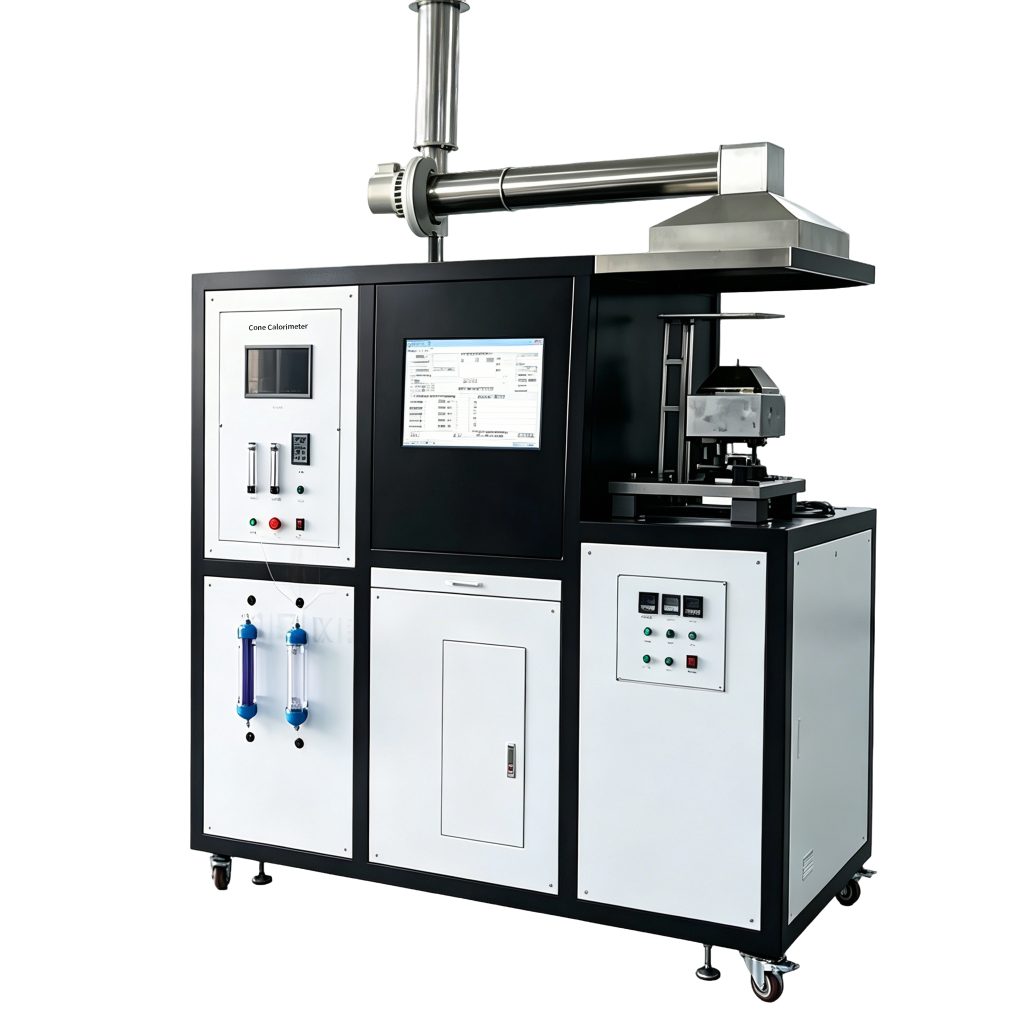
The Versatility of the Cone Calorimeter
The Cone Calorimeter is widely regarded as the most significant bench-scale instrument in fire testing. By measuring the oxygen consumption during combustion, it provides precise data on Heat Release Rate (HRR), Mass Loss Rate (MLR), and Smoke Production Rate (SPR). These parameters are essential for predicting how materials will perform in real-world fire scenarios.
1. Building and Construction Materials
Building safety begins with the right materials. The Cone Calorimeter is extensively used to test insulation boards, wall coverings, ceiling tiles, and flooring. For instance, flooring materials are often evaluated under standards like ISO 9239-1 to determine critical radiant flux. Testing these materials helps architects and engineers select components that slow the spread of fire, providing vital time for building evacuations.
2. Plastics and Polymers
Plastics are everywhere—from automotive interiors to electronic casings. However, their high flammability poses significant risks. Testing plastics with a Cone Calorimeter allows manufacturers to quantify how quickly a material burns and the volume of smoke it generates. This data is crucial for the automotive and electronics industries to design safer components that resist electrical faults and protect passengers.
3. Textiles and Upholstery
In public spaces like hotels, theaters, and hospitals, the fire safety of textiles is paramount. Our equipment evaluates the flammability of curtains, carpets, and upholstered furniture. By analyzing ignition time and heat release, manufacturers can develop fabrics that comply with global fire regulations and reduce the risk of rapid fire spread in populated environments.
4. Advanced Composites and Elastomers
Composite materials used in aerospace and marine applications offer superior strength but present complex fire behaviors. The Cone Calorimeter provides a reliable method to test these materials, helping engineers optimize material combinations for weight reduction without sacrificing fire safety. Similarly, rubber seals, gaskets, and tires are tested to predict their performance under high-temperature conditions.
Why Choose Baoruitong Fire Testing Solutions?
Baoruitong Automation Equipment Co., Ltd. is dedicated to providing laboratory equipment that balances precision with ease of use. Our Cone Calorimeter systems are engineered to meet international benchmarks:
- Standard Compliance: Fully adheres to ISO 5660, ASTM E1354, and BS 476-15.
- High-Precision Sensors: Features advanced oxygen analyzers and load cells for consistent and repeatable data.
- Safety First: Integrated fire suppression and exhaust monitoring systems to ensure a safe laboratory environment.
Commitment to Reliability: 1-Year Warranty
We stand behind the quality of our instrumentation. Baoruitong Automation Equipment Co., Ltd. provides a 1-year warranty (One-year warranty) on our Cone Calorimeters. Our professional technical support team offers global assistance to ensure your fire testing operations remain uninterrupted and accurate.
FAQ
Q1: What is the main principle behind the Cone Calorimeter?
A: The instrument operates on the Oxygen Consumption Principle, which assumes that the heat released from burning a material is directly proportional to the amount of oxygen consumed during the process (approximately 13.1 MJ/kg of oxygen).
Q2: Can the Cone Calorimeter test liquid materials?
A: While primarily designed for solids, liquids can be tested by placing them in specialized specimen holders or by saturating a non-combustible substrate, allowing researchers to evaluate the fire hazard of oils, paints, and solvents.
Q3: How long does a typical test take?
A: Depending on the material and the specific standard (like ISO 5660), a test usually lasts between 20 to 60 minutes, providing a comprehensive profile of the material’s fire behavior from ignition to extinction.
Q4: Does the equipment require specialized laboratory conditions?
A: Yes, the Cone Calorimeter requires a stable exhaust system to handle combustion products and a controlled environment to ensure the precision of the oxygen and gas analyzers.
Q5: Is the data generated by Baoruitong’s equipment acceptable for international certification?
A: Absolutely. Because our equipment follows standardized methods like ASTM E1354, the data produced can be used for research, quality control, and as part of the documentation required for various international safety certifications.