
SBI Test for Waterproof Membranes: EN 13823 Fire Testing
In the world of construction, “waterproof” isn’t the only safety label that matters. For building membranes, the “reaction to fire” is just as critical.
Modern construction projects increasingly demand materials that offer both superior moisture protection and high-level fire safety. Waterproofing systems, often installed in hidden cavities or as part of complex roofing and facade systems, must undergo rigorous evaluation to determine how they contribute to fire growth. The gold standard for this evaluation in the European and international markets is the Single Burning Item (SBI) test according to EN 13823.
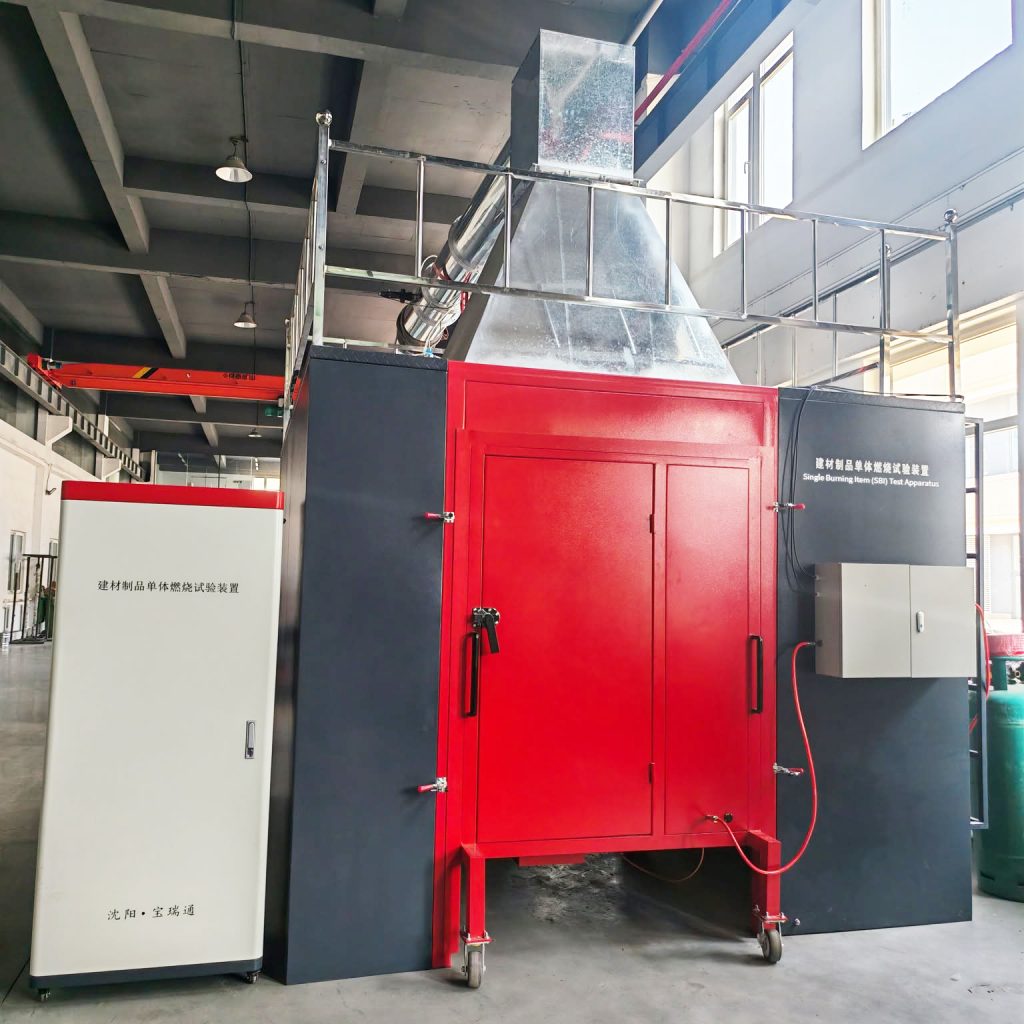
As a leading manufacturer of fire safety and laboratory testing instruments, Baoruitong Automation Equipment Co., Ltd. (BRT) highlights the importance of standardized fire testing for specialized building materials and introduces the JCDT Single Burning Item Test Apparatus — designed to deliver precise fire classification data for manufacturers of membranes, panels, and insulation.
What is the SBI Test (EN 13823)?
The SBI test is a method used to determine the reaction to fire performance of building products (excluding floorings) when exposed to a single burning item — simulating a fire starting in the corner of a room near the material.
For materials like waterproof membranes, the test evaluates how the product behaves during the initial stages of a fire. It is a mandatory requirement for achieving fire classifications under the EN 13501-1 system (typically for classes B, C, and D).
Key Indicators Measured in an SBI Test
To assign an accurate fire rating, the SBI test measures several critical parameters in real-time:
- FIGRA (Fire Growth Rate Index): The rate at which heat is released during the test. A lower FIGRA means the material contributes less to a rapidly growing fire.
- THR600s (Total Heat Release): The total amount of heat released by the specimen during the first 600 seconds of exposure.
- SMOGRA (Smoke Growth Rate Index): How fast smoke is produced. In high-rise buildings, visibility during evacuation is a life-saving factor.
- TSP600s (Total Smoke Production): The total volume of smoke produced in the first 10 minutes.
- Flaming Droplets/Particles: Whether the material drips burning liquid that could spread the fire to other areas.
BRT JCDT: Precision Testing for High-Performance Membranes
Testing specialized materials like waterproof membranes requires equipment that can handle varied specimen behaviors while maintaining extreme measurement accuracy. The BRT JCDT Single Burning Item Test Apparatus is engineered to meet these demands.
Product Highlights:
- Precision Exhaust Control: Features an automatically controlled exhaust rate of 0.5 to 0.65 m³/s, ensuring stable smoke collection and reliable data.
- High-Sensitivity Sensors: Equipped with imported K-type sheathed thermocouples (accuracy ±0.5°C) and pressure sensors (±2 Pa) to capture even the smallest thermal changes.
- Automated Data Acquisition: The system automatically logs output from mass flow controllers, gas analyzers, and white-light smoke measurement systems.
- Intelligent Software: The computer calculates FIGRA, SMOGRA, and heat release rates automatically, delivering audit-ready reports that meet EN 13823 and GB/T 20284 standards.
- Durable & Reliable Design: Built with a double-layer insulated exhaust duct and a detachable cabinet frame for easier maintenance and consistent performance across thousands of tests.
Why Waterproof Membrane Manufacturers Need SBI Testing
For manufacturers of products like the Oldroyd Xtf or other fire-retardant membranes, passing the SBI test is the bridge to market entry in regulated zones. It proves that the “fire-retardant” claim on the spec sheet is backed by quantifiable numbers. Whether it’s a basement waterproofing system or a roofing membrane, providing a certified EN 13823 test report builds trust with architects, engineers, and safety regulators.
FAQ
What is the purpose of an SBI test for building materials? The SBI test simulates a corner-fire scenario to evaluate how building materials contribute to fire growth (FIGRA), heat release (THR), and smoke production (SMOGRA).
Which classification is achieved through an SBI test? The SBI test is primary for achieving fire classifications B, C, and D under the EN 13501-1 standard (European reaction to fire classification).
Can the BRT JCDT test both membranes and panels? Yes, the JCDT is designed for a wide range of building products, including waterproof membranes, insulation boards, and decorative panels.
What gas is used for the SBI test burner? Commercial-grade propane gas is typically used, with a purity of at least 95%, as specified in the EN 13823 standard.
Does BRT provide installation and training? Yes, BRT provides comprehensive one-stop services, including equipment installation, operation training, and lifetime technical assistance.
Get a Quote Today
Need a reliable Single Burning Item (SBI) tester for your building material certification? Contact Shenyang Baoruitong Automation Equipment Co., Ltd. today for a customized quotation and detailed technical specifications.
Email: info@brt-test.com | WhatsApp: +86 15604057553 | Web: www.brt-test.com