
HDT and Vicat: The Key Heat Resistance Indices of Plastics Explained
News Release — Shenyang, China — Shenyang Baoruitong Automation Equipment Co., Ltd., a professional manufacturer of plastics testing instruments and laboratory equipment, today published an industry insight report on the key heat resistance indices of plastics — Heat Deflection Temperature (HDT) and Vicat Softening Temperature (Vicat). In the plastics industry, heat resistance is a critical factor that determines product quality: when exposed to heat, plastics may soften, deform or lose mechanical strength, affecting both performance and service life. Standardized testing of these indices helps engineers and manufacturers select the right plastic for every application (source: Vichem).
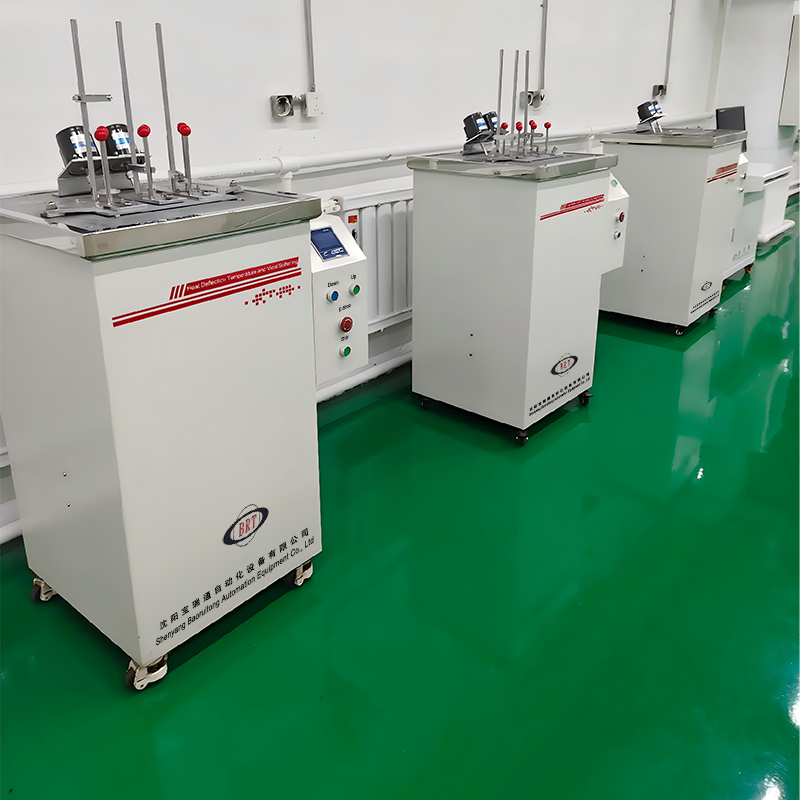
Why Heat Resistance Testing Matters for Plastics
Plastic products are constantly exposed to heat — from automotive engine compartments and electrical devices to coatings and thin films. Without proper control of heat resistance, products can fail in the field through warping, sagging, cracking or softening. Two standardized indices, HDT and Vicat, each reflect a different aspect of thermal behavior, and together they give manufacturers a complete picture of how a material will perform under real-world conditions.
HDT (Heat Deflection Temperature)
Definition and Testing Principle
HDT is the temperature at which a plastic specimen begins to deform under a defined load. It is not the melting point — rather, it is the threshold where the material loses dimensional stability under stress. HDT is measured according to ASTM D648 or ISO 75, with standard test loads of 0.45 MPa or 1.8 MPa. During testing, the specimen is heated at 2 °C per minute; when it reaches the specified deflection, the corresponding temperature is recorded as the HDT. This method provides objective results reflecting the material’s ability to maintain its shape under combined heat and load.
Technical Significance and Practical Applications
HDT indicates the real working limit of a material. Plastics with a higher HDT retain stiffness and shape under harsher conditions, making it an essential index for applications requiring long-term static load resistance, such as engineering plastics and industrial coatings. In practice, HDT testing is applied to:
- Automotive parts — components that must keep their shape under engine heat
- Electrical devices — housings and enclosures exposed to thermal stress
- Heat-resistant coatings — verifying that coating layers resist cracking, warping or sagging under prolonged heat
Vicat (Vicat Softening Temperature)
Definition and Testing Method
The Vicat softening point is the temperature at which a standard needle penetrates a plastic specimen to a defined depth. Unlike HDT, this index does not measure structural deformation — it focuses on the onset of surface softening. Testing follows ASTM D1525 or ISO 306, with conditions including loads of 10 N or 50 N and heating rates of 50 °C/h or 120 °C/h. When the needle reaches the required penetration depth, the corresponding temperature is recorded as the Vicat point.
Technical Significance and Practical Applications
Vicat is particularly useful for products under little or no load. It reveals the point at which a material begins to soften, predicting early changes during heating — a critical consideration for thin plastics and decorative applications where thermal stability directly affects aesthetics. Vicat testing is often applied in:
- Extrusion and molding processes — understanding processing temperature limits
- Thin film evaluation — predicting softening behavior of lightweight materials
- Coatings — identifying early softening risk in primers or topcoats, allowing manufacturers to adjust formulations
HDT vs. Vicat: A Practical Comparison
| Aspect | HDT (Heat Deflection Temperature) | Vicat Softening Temperature |
|---|---|---|
| What it measures | Deformation under defined load | Onset of surface softening |
| Test principle | Specimen deflection under load while heating | Needle penetration to defined depth |
| Standards | ASTM D648 / ISO 75 | ASTM D1525 / ISO 306 |
| Test conditions | 0.45 MPa or 1.8 MPa; 2 °C/min heating | 10 N or 50 N; 50 °C/h or 120 °C/h |
| Best suited for | Products enduring load + temperature over long periods (engineering plastics, industrial coatings) | Thin, lightweight materials or thermally processed products (films, decorative parts) |
| Typical applications | Automotive parts, electrical devices, heat-resistant coatings | Extrusion, molding, thin film evaluation, primers and topcoats |
Using both indices together enables manufacturers to select the right plastic for each application, balance performance and cost, and ensure products meet technical demands while maintaining durability throughout their service life.
The Role of Testing Instruments in Heat Resistance Evaluation
Accurate HDT and Vicat measurement requires precision testing equipment — controlled heating rates, stable load application and precise deflection/penetration detection. For plastics manufacturers, compounders and QC laboratories, reliable heat deflection temperature testers and Vicat softening point testers deliver:
- Standard-compliant results — aligned with ASTM D648, ISO 75, ASTM D1525 and ISO 306
- Objective material data — for grade selection, formulation adjustment and incoming inspection
- Consistent quality control — repeatable measurements across production batches
- Regulatory and customer confidence — documented thermal performance evidence
About Shenyang Baoruitong Automation Equipment Co., Ltd.
Shenyang Baoruitong Automation Equipment Co., Ltd. is a professional manufacturer of combustion testing instruments and laboratory equipment for the plastics, foam, textile, paper and building materials industries. Headquartered in Shenyang, China, the company is committed to precision engineering and international standard compliance, helping manufacturers worldwide verify product safety, improve quality control and meet regulatory requirements. The company provides technical consultation, calibration guidance and after-sales support to ensure reliable, long-term operation of its testing instruments.
For more information about Shenyang Baoruitong’s plastics testing instruments, pricing or a quotation, please contact our sales team or visit our website.
FAQ
Q1: What is the heat deflection temperature (HDT)? HDT is the temperature at which a plastic specimen begins to deform under a defined load (0.45 MPa or 1.8 MPa), measured per ASTM D648 or ISO 75. It indicates the material’s ability to maintain shape under combined heat and stress.
Q2: What is the Vicat softening temperature? The Vicat softening temperature is the point at which a standard needle penetrates a plastic specimen to a defined depth under loads of 10 N or 50 N, measured per ASTM D1525 or ISO 306. It reflects the onset of surface softening during heating.
Q3: What is the difference between HDT and Vicat? HDT measures deformation of the whole specimen under load, while Vicat measures surface softening by needle penetration. HDT suits load-bearing applications; Vicat suits thin, lightweight or thermally processed materials.
Q4: Which standards apply to HDT and Vicat testing? HDT is tested per ASTM D648 or ISO 75; Vicat is tested per ASTM D1525 or ISO 306. These are the internationally recognized standards for plastic heat resistance indices.
Q5: Why are HDT and Vicat important for plastic product quality? They predict how plastics behave under heat — softening, deformation or loss of mechanical strength — helping manufacturers select the right material, optimize formulations and ensure products perform reliably throughout their service life.