
New Research Verifies Smoke Toxicity Metrics; Shenyang Baoruitong Supplies ASTM E1678, NFPA 269 & ISO 5660 Test Gear
Academic paper verifies LC50 & FED smoke toxicity evaluation for PVC, timber, PMMA; Shenyang Baoruitong provides cone calorimeter & smoke toxicity test chamber compliant with ASTM E1678, NFPA 269, ISO 13344, ISO 5660 for building material fire hazard certification.
[Shenyang, China] – August 7, 2026 – A landmark joint research paper by The Hong Kong Polytechnic University and Tsinghua University systematically evaluates smoke toxicity hazards of mainstream construction materials including timber, PVC and PMMA under NFPA 268, ASTM E1678 and ISO 5660 standard test conditions, quantifying lethal toxicity via LC50 and FED core indicators. To meet surging global demand for standardized smoke toxicity testing, Shenyang Baoruitong Automation Equipment Co., Ltd. (BRT) launches a complete series of integrated test instruments fully aligned with all international smoke toxicity assessment specifications mentioned in the research paper, enabling laboratories and material manufacturers to conduct accurate, repeatable toxic gas analysis for building product code compliance.
Core Research Findings on Building Material Smoke Toxicity
The academic study led by C.L. Chow, W.K. Chow and Z.A. Lu addresses a critical gap in global fire codes: most regional building regulations currently lack mandatory smoke toxicity evaluation clauses, despite smoke inhalation being responsible for roughly 75% of all fire fatalities worldwide. The team carried out comparative testing using two core standard setups:
- Smoke toxicity test rig following ASTM E1678 / NFPA 269 for LC50 & FED calculation
- ISO 5660 cone calorimeter for heat release, smoke yield and CO concentration monitoring
Key experimental conclusions:
- PVC exhibits the highest smoke toxicity among tested materials, with the minimum LC50 value. Its combustion releases high concentrations of corrosive, lethal HCl and HCN gas (up to 150 ppm), which severely damages test equipment and poses extreme life risks during fires.
- PMMA delivers the lowest toxic risk; its combustion only generates CO and CO₂ without halogen or cyanide toxicants, resulting in the highest LC50 reading.
- All timber varieties (pine, oak, beech, maple) produce high carbon monoxide under incomplete combustion, with pine recording peak CO concentration exceeding 4000 ppm, creating significant asphyxiation hazards.
- Fractional Effective Dose (FED) is the authoritative evaluation metric defined by the N-Gas Model. When FED reaches 1, the mixed smoke toxicants can cause 50% animal lethality, serving as the core basis for fire hazard modelling and performance-based building code design.
The paper points out ISO 13344 is the sole global standard for lethal toxic potency testing, while ASTM E1678 / NFPA 269 provide mature bench-scale testing workflows. It urges Hong Kong and Asian building codes to integrate smoke toxicity limits for decorative, insulation and piping materials, especially widely used PVC products.
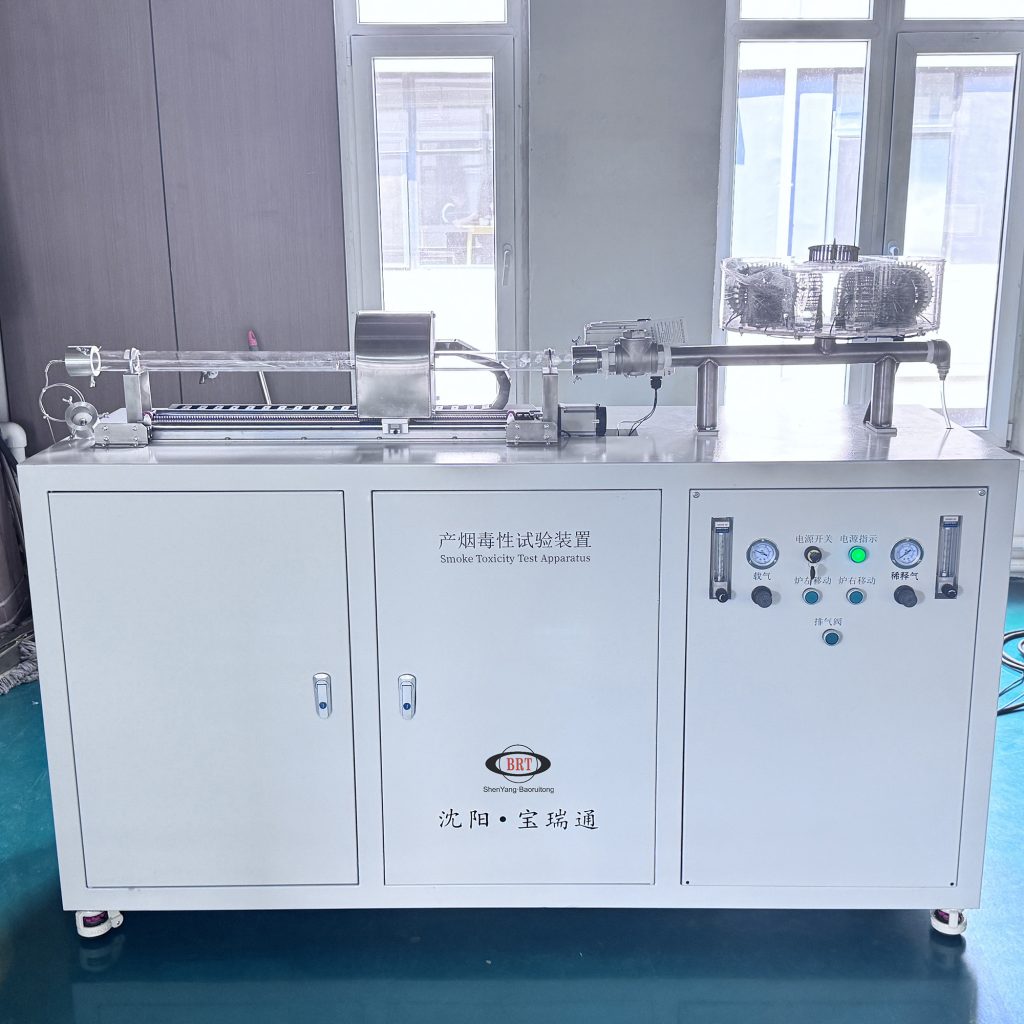
About Shenyang Baoruitong Automation Equipment Co., Ltd.
Founded in 2012 in Shenyang’s advanced equipment manufacturing zone, Shenyang Baoruitong Automation Equipment Co., Ltd. specializes in independent R&D, production and global export of full-spectrum fire performance testing instruments for construction, cable and plastic materials. The company holds ISO9001 quality certification and CE product certification, with a 3,000㎡ standardized production workshop and dedicated fire testing algorithm R&D team consisting of over 20 senior engineers.
For more than 14 years, BRT has maintained long technical cooperation with domestic fire science institutes and top universities including Tsinghua University, continuously upgrading instrument functions based on cutting-edge academic research such as this smoke toxicity study. Its complete product portfolio covers smoke toxicity test chambers, ISO 5660 cone calorimeters, bomb calorimeters, vertical/horizontal fire furnaces, oxygen index testers and smoke density meters, widely supplied to ISO 17025 certification labs, construction material factories and university fire engineering research institutes across over 30 countries including Southeast Asia, Europe, USA and Australia.
All BRT test equipment embeds the LC50, FED calculation formulas and gas monitoring logic cited in the joint academic paper, supporting automatic collection of O₂, CO, CO₂, HCl, HBr, HCN transient concentration data and one-click generation of standardized test reports compliant with ASTM E1678, NFPA 269, ISO 13344 and ISO 5660.
1. BRT ASTM E1678 / NFPA 269 Smoke Toxicity Test Chamber
Fully replicates the test setup used in the university research, supporting 28.5 kW/m² radiant heat exposure for 15-minute specimen combustion, with a 30-minute continuous multi-gas monitoring system:
- Synchronous real-time detection of CO, CO₂, O₂, HCl, HBr, HCN concentration curves matching the paper’s test data graphs
- Built-in industrial-grade gas analysis sensors to record transient toxic gas ppm values
- Automatic FED and LC50 calculation module preloaded with the paper’s official mathematical models
- Supports correction calculation for post-flashover fire conditions and PVC high-corrosion gas testing
- Sealed corrosion-resistant combustion cavity specially optimized for PVC sample testing to prevent pipeline damage from halogen acid gas
2. BRT ISO 5660 Standard Cone Calorimeter
Matches the comparative testing equipment used in the research for heat release and smoke characteristic analysis:
- Adjustable radiant heat flux from 20 kW/m² to 50 kW/m², suitable for hard-to-ignite PVC specimens
- Continuous monitoring of peak CO concentration, total smoke release (TSR) and smoke extinction area (SEA)
- Auto exports FED values calculated from peak carbon monoxide readings as specified in ISO 13344
- High-precision load cell to record real-time sample mass loss for LC50 conversion
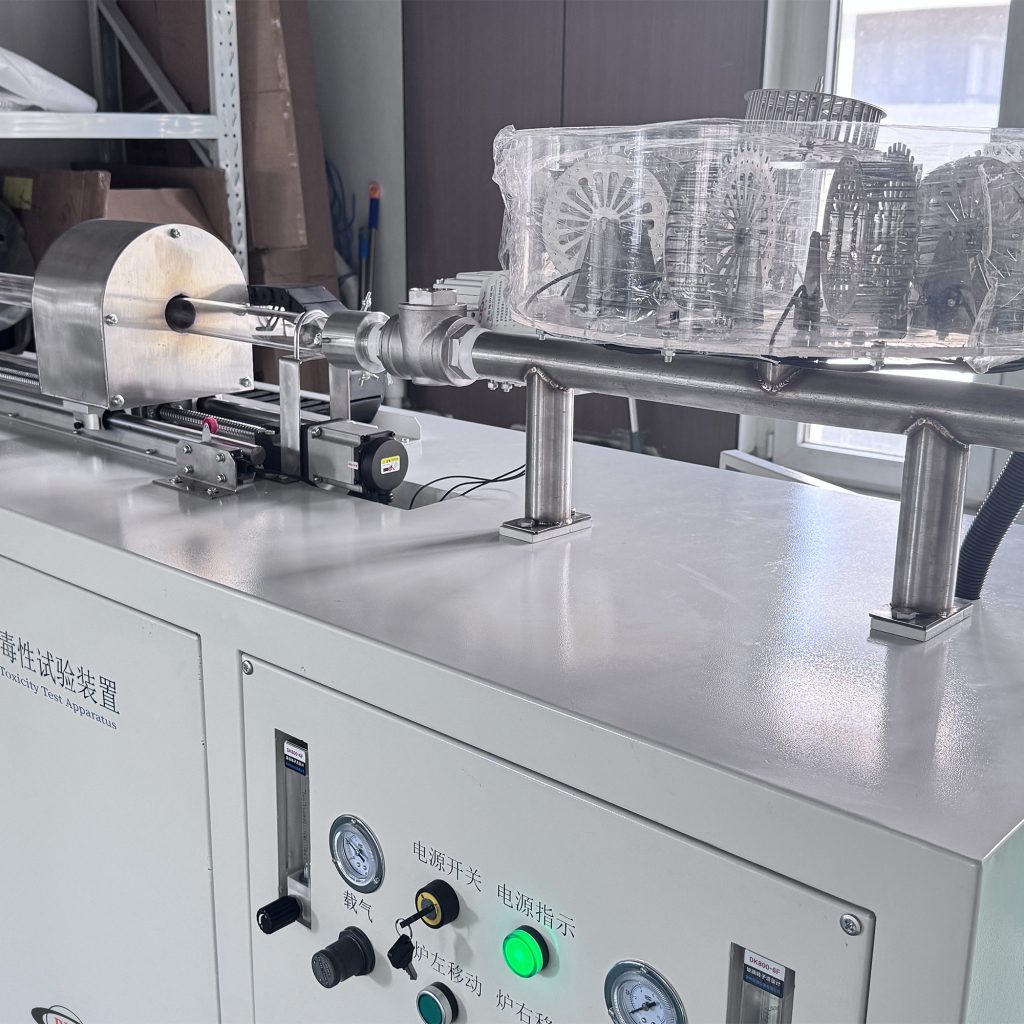
Full Test Workflow Supported by BRT Integrated System
- Sample preparation: Supports timber, PVC, PMMA and composite construction material specimens as covered in the research
- Two optional test modes: NFPA 269 toxicity chamber for lethal potency testing; ISO 5660 cone calorimeter for heat & smoke property comparison
- Automatic data collection: Records time-concentration curves for all six key toxic gases as shown in the paper’s figures
- Intelligent calculation: One-click output of FED, LC50, corrected LC50 and TSR core indicators without manual spreadsheet work
- Audit-ready report: Data fully traceable for third-party certification and performance-based building code submission
Target End Users of BRT Smoke Toxicity Test Equipment
- ISO 17025 accredited third-party fire safety testing laboratories
- PVC, timber, acrylic, insulation and façade material manufacturers’ R&D & QC departments
- University fire engineering & material science research labs (aligned with Tsinghua, PolyU academic testing standards)
- Government building compliance inspection authorities
- Green & sustainable construction material developers conducting low-toxicity product R&D
Industry Value of Standardized Smoke Toxicity Testing Equipment
As more regions upgrade prescriptive fire codes to performance-based engineering design, smoke toxicity indicators (LC50, FED) are rapidly becoming mandatory access thresholds for construction materials entering the market. The research proves bench-scale BRT test equipment generates LC50 data highly consistent with full-scale fire scenarios, allowing manufacturers to complete low-cost pre-certification screening before full building fire tests.
Shenyang Baoruitong provides complete one-stop support for clients purchasing smoke toxicity testing equipment, including free training covering the test principles and calculation methods outlined in the Tsinghua & PolyU academic paper, as well as customized gas sensor upgrade solutions for high-halogen material testing.
About Shenyang Baoruitong Automation Equipment Co., Ltd.
With a full industrial chain covering hardware machining, high-precision sensor assembly and self-developed industrial SCADA control software, BRT independently develops all fire test instrument algorithms by referencing global authoritative academic papers and international standards such as ASTM, NFPA, ISO, EN and GB. The company provides custom equipment functional development for special lab testing demands, and all products undergo 24-hour continuous ageing inspection before delivery to guarantee long-term measurement stability and corrosion resistance during toxic gas testing.
Clients can download full technical datasheets for smoke toxicity chambers and cone calorimeters, request customized lab layout planning, and obtain competitive quotations via the official website brt-test.com online inquiry channel.