New Technical Guidance Unlocks Accurate ISO 1716 Bomb Calorimeter Testing for All Building Materials
SP NORDTEST 871-90 guide details standardised adiabatic & isoperibol bomb calorimeter workflows for ISO 171 building material calorific testing; Shenyang Baoruitong’s JRZ10 calorimeter fully integrates this authoritative test algorithm for global lab compliance.
August 6, 2026 – The landmark SP NORDTEST Technical Note 757 research document, globally recognised as the definitive operation manual for bomb calorimeter calorific value testing, has become the core technical benchmark adopted by Shenyang Baoruitong Automation Equipment Co., Ltd. (BRT) for its JRZ10 series building material combustion heat tester. The comprehensive NORDTEST guide resolves long-standing ambiguities in ISO 1716 test protocols for wood, PVC, gypsum, composite and halogen-containing construction materials, while BRT’s automated bomb calorimeter embeds all standardised calculation formulas, correction models and sample processing workflows outlined in the paper to deliver audit-ready, cross-border compliant test data for labs worldwide.
About Shenyang Baoruitong Automation Equipment Co., Ltd.
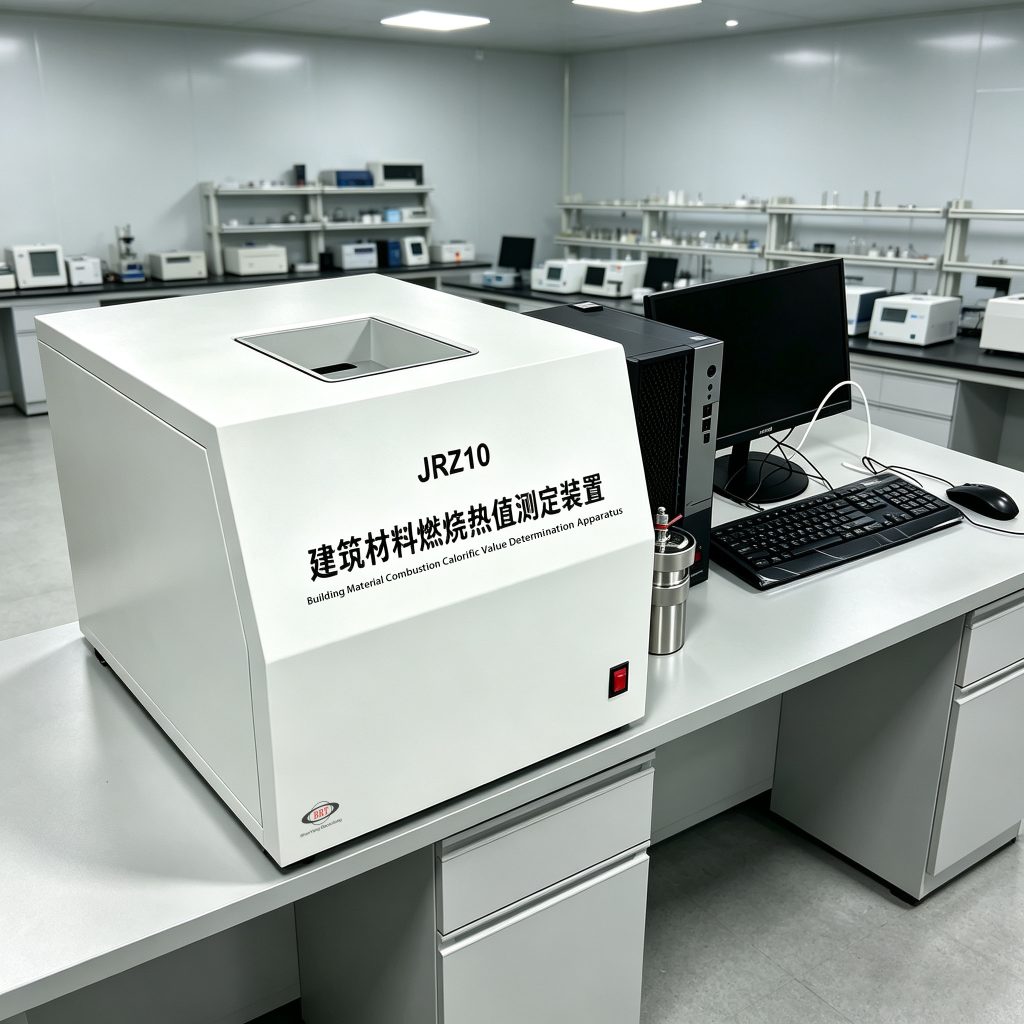
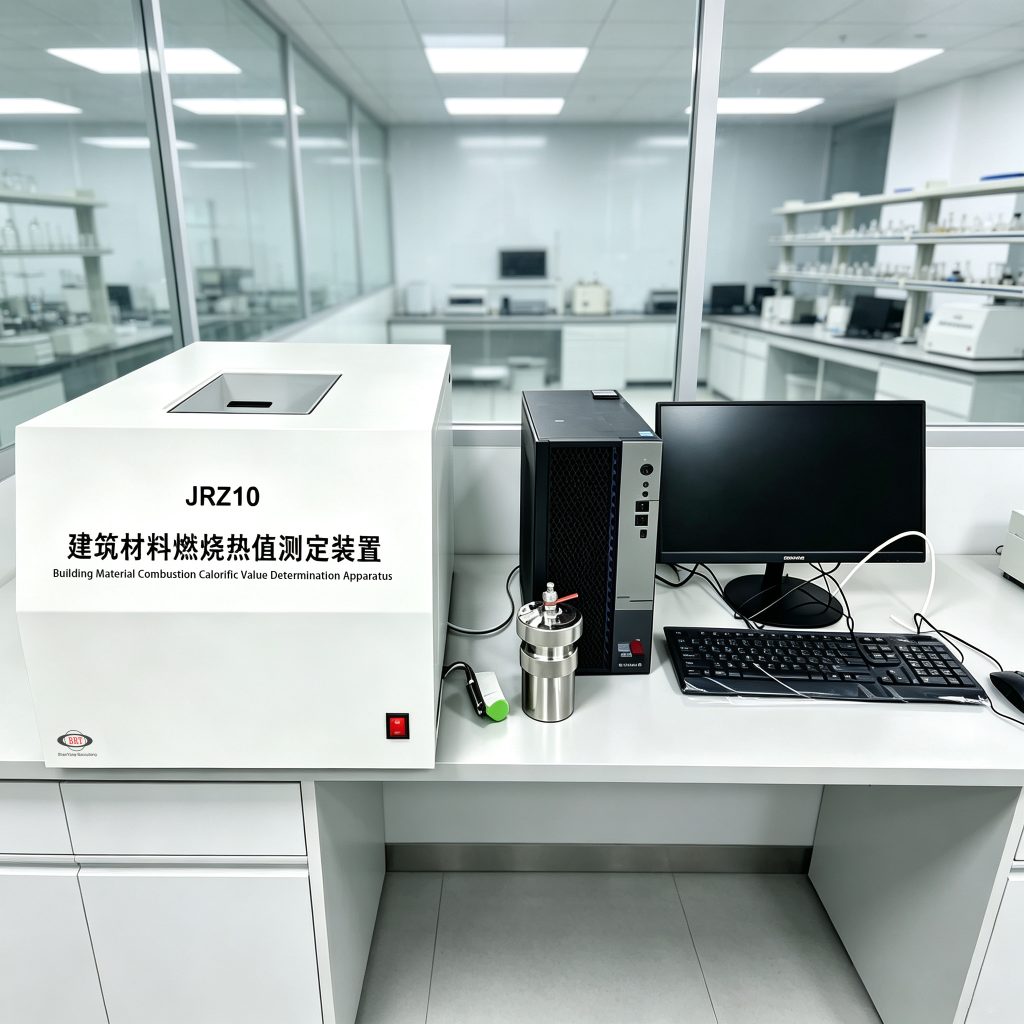
Two Core Calorimeter Types Standardised in the NORDTEST Guide & Implemented on BRT JRZ10
- Isoperibol (Isothermal Jacket) Bomb Calorimeter
Constant-temperature water bath design requires mathematical offset for heat loss; BRT software auto-executes both Regnault-Pfaundler and Dickinson extrapolation algorithms to compute corrected temperature rise (Θ) without manual spreadsheet work.
- Adiabatic Bomb Calorimeter
Zero temperature difference thermal balance design; the JRZ10 system automatically tracks pre-test, main combustion and post-test temperature drift to complete simplified correction calculations as specified in the technical paper.
Standardised End-to-End Test Workflow Built Into BRT JRZ10
1. Intelligent Sample Preparation Guidance
- Homogeneous wood/plastics: Grind to 250μm powder and support automatic pelletisation
- Gypsum, mineral wool and low-combustion materials: Recommend benzoic acid combustion aid with controlled mixing ratio (max 80% total heat contribution)
- PVC and halogenated composites: Prompt hydrogen-rich auxiliary fuel addition to convert chlorine into aqueous HCl to match real-world fire chemistry
- Auto 20h conditioning parameter reminder (20°C ±2°C, RH 65% ±5%) for hygroscopic specimens
2. Automatic Bomb Assembly & Oxygen Control
3. Auto Side Reaction Correction Calculation (Core Technical Advantage)
- Nitric acid decomposition correction via titration input
- Sulphur element conversion adjustment (SO₂ ↔ H₂SO₄)
- PVC chlorine combustion state compensation
- Unburned carbon soot heat loss offset (33 J/mg carbon)
The instrument instantly outputs gross calorific value (qᵥ,gr) and net calorific value via the standard formula: qᵥ,net = qᵥ,gr − 206 × [H] after users input sample hydrogen content.
4. Standardised Benzoic Acid Calibration Module
Wide Applicable Material Range Supported by BRT JRZ10
Fully compatible with all construction substrates covered in the NORDTEST guidance:
Timber, plywood, OSB, PVC/ABS plastic panels, gypsum wallboard, mineral wool insulation, composite façade claddings, flooring materials, flame-retardant modified building compounds.
Key Benefits of BRT’s NORDTEST-Aligned Calorimeter
- Zero manual calculation: All complex thermodynamic formulas preloaded, eliminating human error in correction computation
- Global standard compatibility: Test reports satisfy ISO 1716, GB/T 14402 and Nordic building code audit requirements
- Difficult sample adaptive logic: Optimised combustion aid matching for non-self-burning inorganic materials
- Long-term data storage: Automatically archives full test curves, titration records and calibration files for third-party audit traceability
- Customised service: BRT provides free technical training covering the full SP NORDTEST testing workflow for all equipment purchasers
Target End Users for BRT JRZ10 Bomb Calorimeter
- ISO 1716 accredited third-party fire safety testing laboratories
- Wood, plastic, insulation and façade material manufacturers’ R&D & QC labs
- University fire engineering and material science research institutes
- National construction product certification authorities
- Flame retardant chemical development enterprises