
Raman and FTIR Spectroscopy for cGMP Quality Control: Chemical Fingerprinting, Polymorph Discrimination and Contaminant Identification
News Release — Shenyang, China — Shenyang Baoruitong Automation Equipment Co., Ltd., a professional manufacturer of laboratory test instruments and combustion testing equipment, today published an industry insight report on Raman spectroscopy and Fourier-transform infrared (FTIR) spectroscopy — the two leading vibrational spectroscopy methods for regulated quality control in the pharmaceutical, chemical and materials industries (source: Triclinic Labs).
The Power of Vibrational Spectroscopy in Regulated Testing
cGMP Raman and FTIR are vibrational spectroscopy methods used for chemical fingerprinting, raw-material identification, form differentiation, contaminant identification, and mixture or mapping applications. Because every molecule has a characteristic vibrational spectrum, these techniques act like a “molecular fingerprint” — allowing laboratories to identify what a material is, which crystalline form it takes, and what it may contain beyond its declared composition.
Spectroscopic identification is valuable only when the data and interpretation are reliable enough to support the regulated decision. Under current good manufacturing practices (cGMP), qualified instrumentation, validated or verified methods, and complete documentation are essential to turn spectral evidence into defensible quality decisions.
Key Applications of Raman and FTIR Analysis
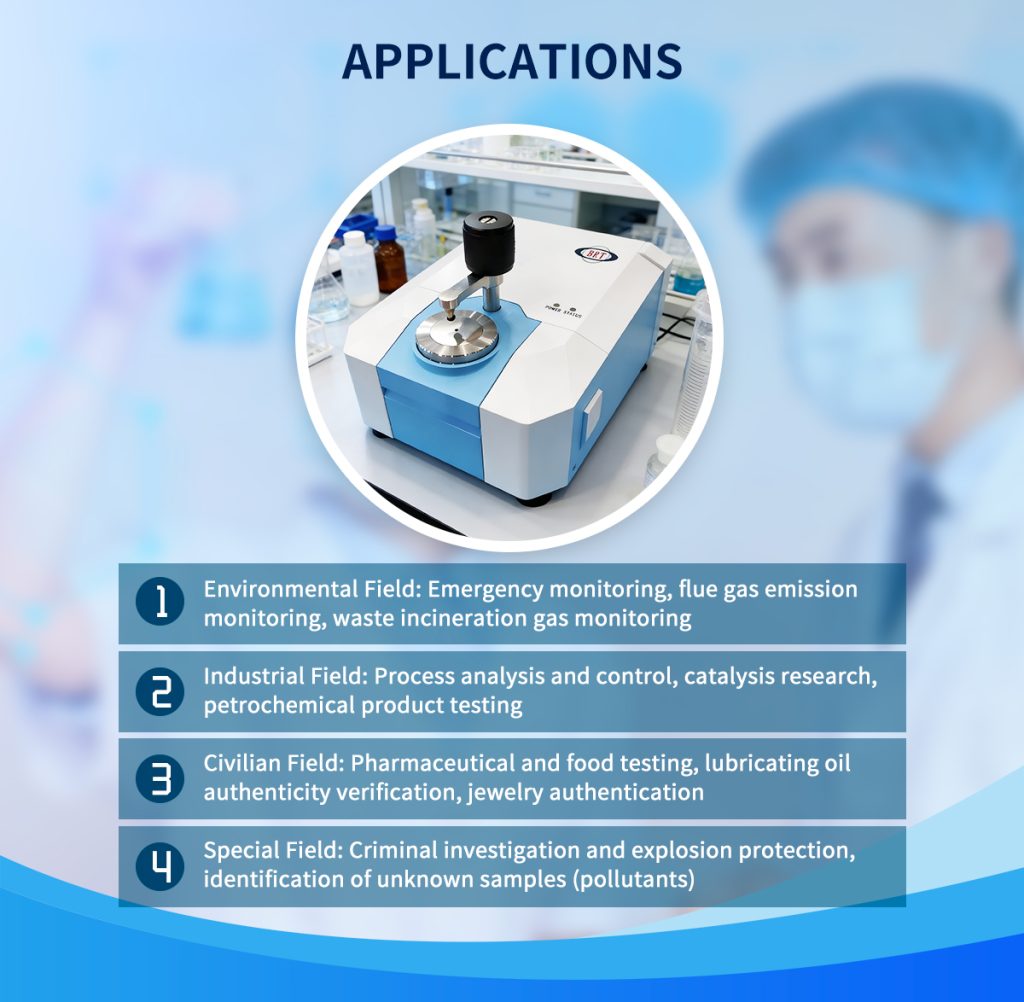
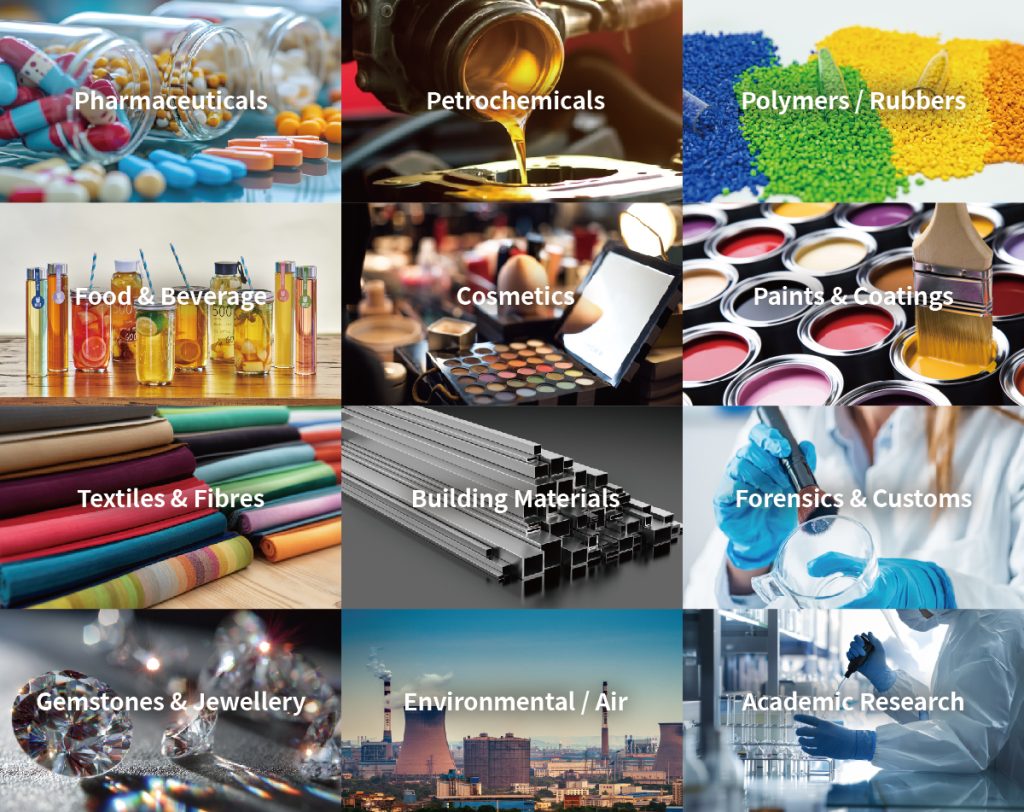
Raman and FTIR methods are used when the quality question can be answered by molecular vibrations, spatial location, polymorph discrimination, component mapping, or a validated raw-material identification method. Real-world applications include:
- Raw-material identity support — confirming incoming materials match their specifications before use
- Release and stability testing — supporting batch disposition and CoA (Certificate of Analysis) issuance
- Foreign-particle and residue investigations — identifying contamination and degradation products
- Polymorph discrimination — distinguishing crystalline forms that behave differently in formulations
- Chemical imaging and component mapping — understanding spatial distribution within a product
- Method development, validation and transfer — building fit-for-purpose analytical methods for regulated decisions
Why Raman and FTIR Are Essential for Pharmaceutical QC
Chemical Fingerprinting and Raw-Material Identification
Raman and FTIR spectrometers deliver rapid, non-destructive molecular fingerprinting of organic and inorganic materials, enabling reliable raw-material identification at goods-inward and throughout the manufacturing process.
Polymorph and Solid-Form Differentiation
Low-frequency Raman techniques capture lattice-mode information that distinguishes polymorphic forms — a critical capability for solid-dose pharmaceuticals where crystal form directly affects solubility, stability and bioavailability.
Contaminant and Degradation-Product Investigation
Spectral library matching and orthogonal techniques identify foreign particles, residues and degradation products with the specificity regulators require.
Chemical Imaging and Component Mapping
Raman microscopy and infrared imaging combine spectral identification with spatial resolution, mapping the distribution of formulation components across a sample surface — from microsampling to whole-tablet analysis.
Method Validation and Data Integrity for cGMP
Under cGMP, the method must be scientifically justified, specific for the intended attribute in the real matrix, controlled under the quality system, validated or verified where appropriate, data-integrity compliant, and lifecycle managed. Key controls include:
- Method status — exploratory, verified compendial, validated custom, and transferred methods each carry different evidence requirements
- Sample matrix control — representative material, placebo/matrix controls, spike studies, and orthogonal methods where specificity may fail
- Data integrity — controlled records, system suitability checks, analyst review, deviations/OOS processes, and traceable calculations that survive QA review, audit and regulatory scrutiny
Instrument Platforms for Modern Raman/FTIR Workflows
A complete vibrational spectroscopy laboratory deploys complementary platforms, each optimized for specific questions:
| Technique | Representative platform | Key capability |
|---|---|---|
| Dispersive Raman microscopy | 785 nm laser, CCD detector, confocal microscope | Chemical imaging, microsampling, polymorph discrimination, component mapping |
| FT-Raman | 1064 nm Nd:YAG laser, InGaAs detector | Reduced fluorescence, library matching, non-destructive fingerprinting |
| Low-frequency Raman | THz-Raman probe, ±5–200 cm⁻¹ | Lattice-mode/polymorph-sensitive measurements |
| Infrared imaging | FPA-based IR microscope | IR chemical imaging, real-time particle ID, distribution mapping |
| FT-IR | ATR, diffuse reflectance, transmission, gas cell | Functional-group ID, spectral-library matching, evolved-gas analysis |
Common Pitfalls — and How to Avoid Them
Regulators and experienced laboratories highlight recurring mistakes that undermine spectral evidence: using exploratory data as release evidence, validating the wrong matrix, ignoring sample preparation, under-documenting controls, relying on a single technique when orthogonal evidence is needed, and failing to define the decision before testing. The remedy is disciplined method development: define the quality attribute and decision up front, choose the technique that fits the matrix, and document every step.
What This Means for Quality-Driven Organizations
For pharmaceutical manufacturers, contract testing labs and materials suppliers, Raman and FTIR spectroscopy deliver decisive advantages:
- Rapid, non-destructive analysis — identify materials and forms without consuming or damaging samples
- Regulatory confidence — cGMP-compliant workflows with validated methods and data integrity
- Broad applicability — from raw-material ID to polymorph discrimination, contaminant investigation and chemical imaging
- Orthogonal evidence — combining Raman, FTIR, XRPD, NMR, microscopy and thermal methods for defensible conclusions
About Shenyang Baoruitong Automation Equipment Co., Ltd.
Shenyang Baoruitong Automation Equipment Co., Ltd. is a professional manufacturer of combustion testing instruments and laboratory equipment for the plastics, foam, textile, paper and building materials industries. Headquartered in Shenyang, China, the company is committed to precision engineering and international standard compliance, helping manufacturers worldwide verify product safety, improve quality control and meet regulatory requirements.
For more information about Shenyang Baoruitong’s testing instruments, pricing or a quotation, please contact our sales team or visit our website.
FAQ
Q1: What is the difference between Raman spectroscopy and FTIR spectroscopy? Raman spectroscopy measures inelastic scattering of monochromatic light (typically 785 nm or 1064 nm lasers), while FTIR (Fourier-transform infrared) spectroscopy measures infrared absorption. They provide complementary molecular information: Raman excels at non-polar, crystalline and aqueous samples, while FTIR is ideal for polar functional groups — and using both gives orthogonal evidence for confident identification.
Q2: What is Raman spectroscopy used for in the pharmaceutical industry? Raman spectroscopy is used for raw-material identification, polymorph and solid-form discrimination, contaminant investigation, chemical imaging, and method development/validation in cGMP quality control.
Q3: Why is polymorph discrimination important? Different crystalline forms (polymorphs) of the same drug substance can have different solubility, stability and bioavailability. Low-frequency Raman and FTIR methods distinguish these forms, which is essential for formulation development and regulatory compliance.
Q4: What does cGMP-compliant FTIR analysis require? cGMP FTIR analysis requires qualified instrumentation, validated or verified methods, controlled reference standards and matrix controls, system suitability checks, documented analyst review, and full data-integrity compliance — so results survive QA review, audit and regulatory scrutiny.
Q5: Can Raman and FTIR identify contaminants in products? Yes. Spectral library matching and complementary techniques such as infrared imaging and Raman microscopy can identify foreign particles, residues and degradation products, including spatially mapping where contaminants are located within a sample.