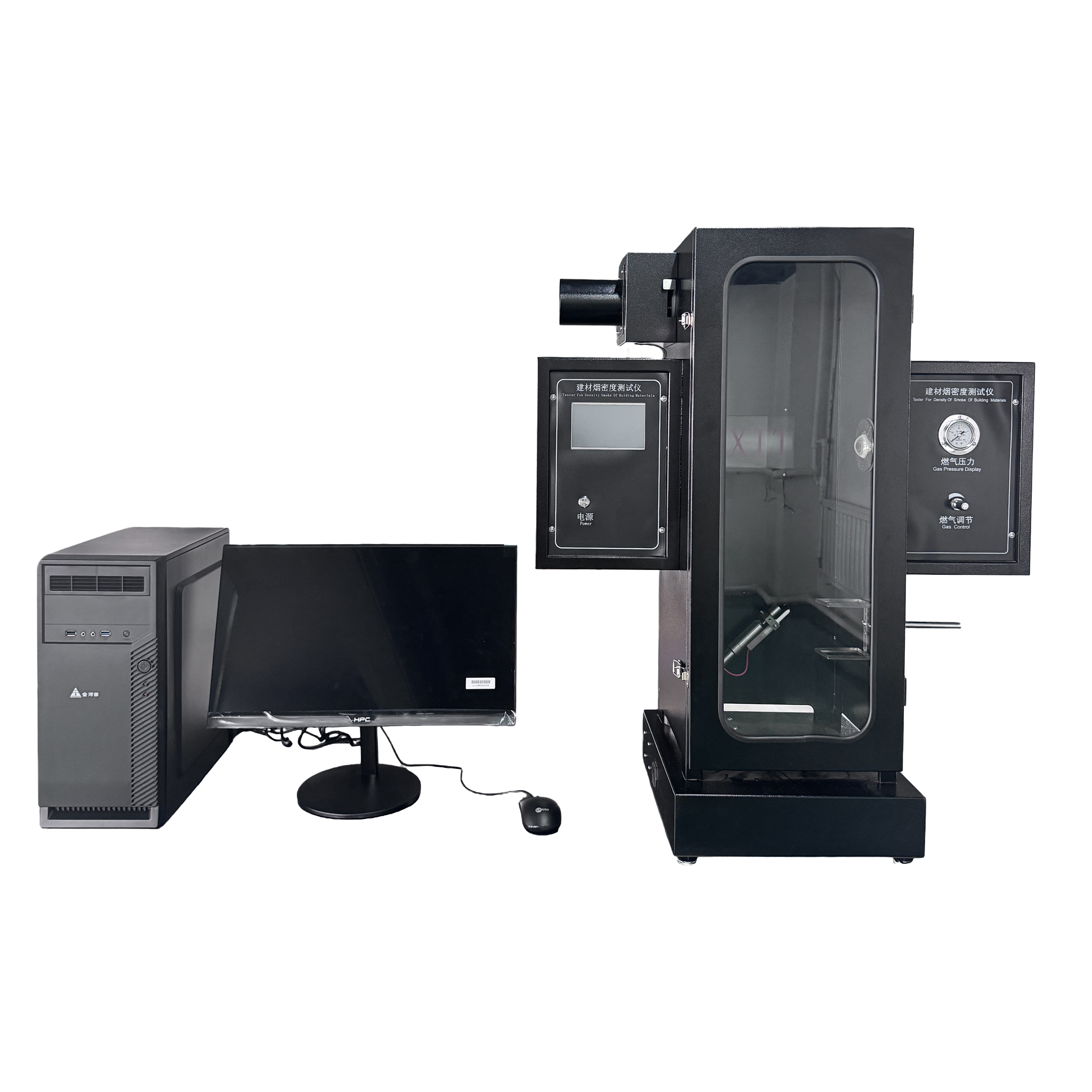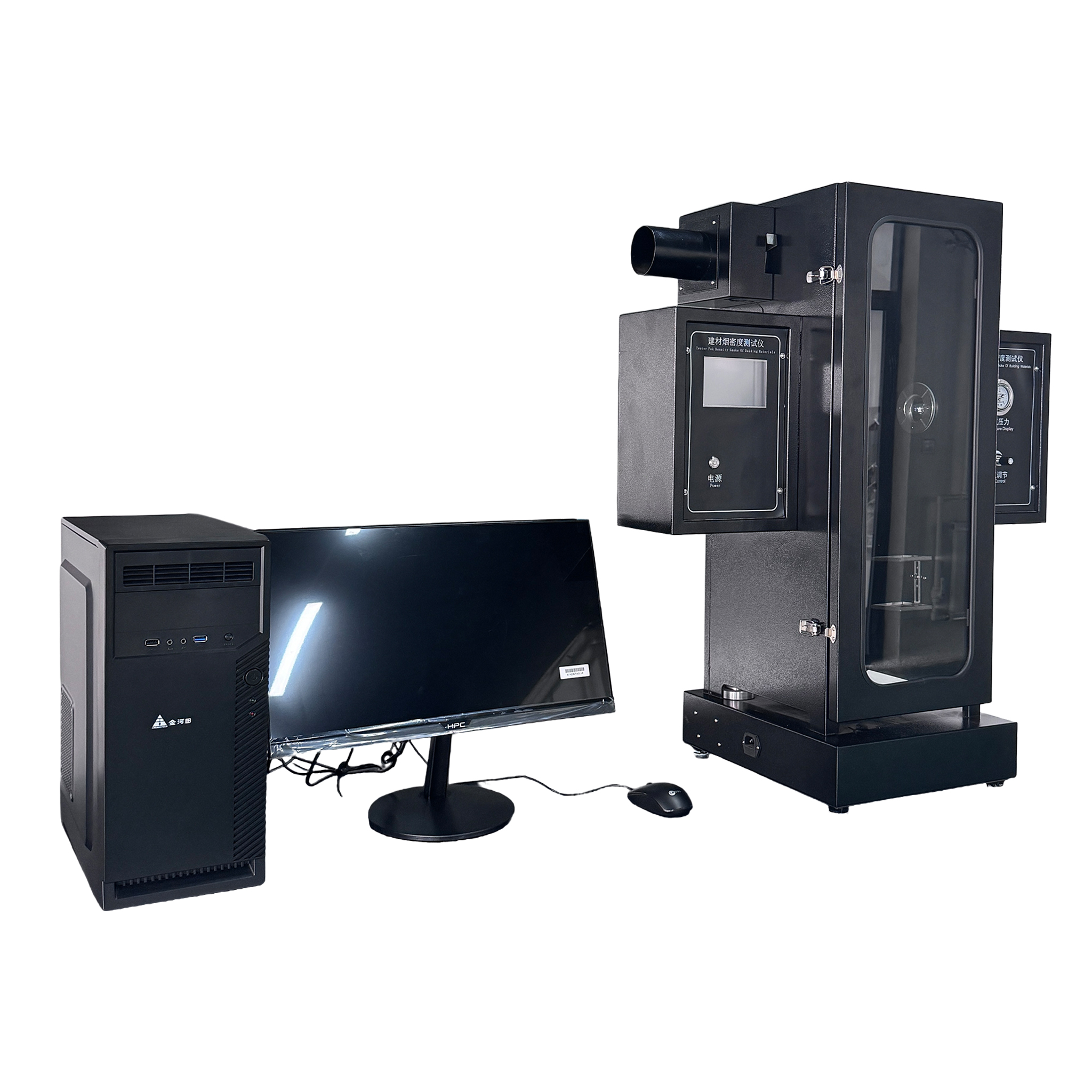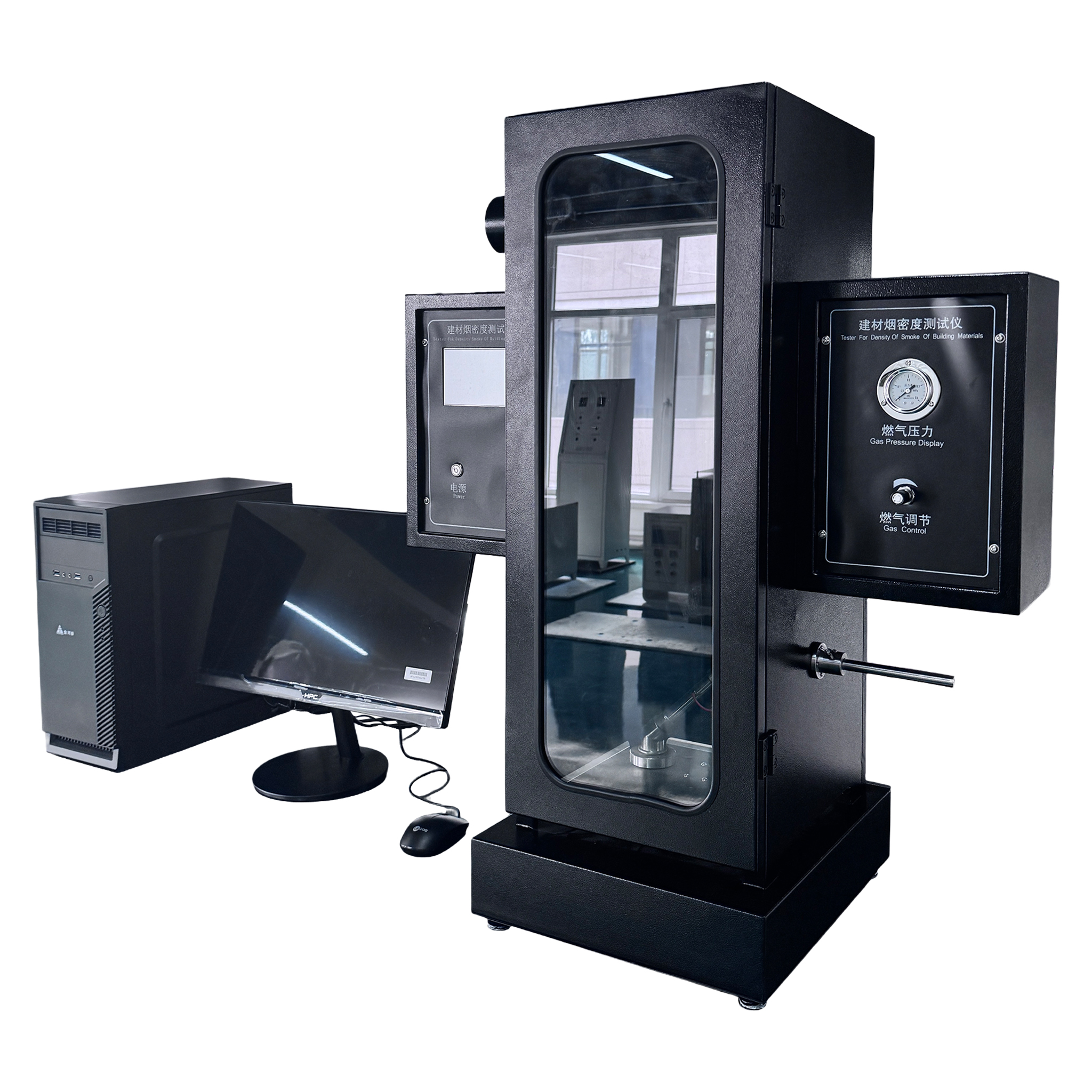
Description
Highlights at a glance
- Dual Control & Multi-PC LAN Sharing Support Comes with dual operation modes: on-board 5-inch touch screen and external computer control, freely switchable. Multiple computers can connect one tester simultaneously via LAN to realize data sharing and centralized test management.
- Automatic Burner & Full Automatic Test Workflow Main and auxiliary Bunsen burners adopt automatic rotating positioning; integrated auto ignition, 4-minute fixed flame timing and post-test automatic smoke exhaust, greatly reducing manual operation steps.
- High-Precision Continuous Smoke Density Detection Supports 0–100% continuous smoke density measurement with ±3% high accuracy, automatically calculates MSD (Maximum Smoke Density) and SDR (Smoke Density Rating) via silicon photocell photoelectric sensing system for objective test data.
- High-Speed Stable FPGA Touch Screen Control System Equipped with 5-inch 800*480 touch display driven by pure hardware FPGA, zero startup delay. Adopts M3+FPGA dual-core architecture with 1GB storage, low power consumption and auto energy-saving mode for long-term stable testing.
- Fully Compliant with GB/T 8627-2007 National Standard Strictly developed in accordance with GB/T 8627-2007 plastic smoke density test standard, matching standard Bunsen burner size, 45° installation angle and standard gas pressure parameters, meeting formal laboratory certification testing requirements.
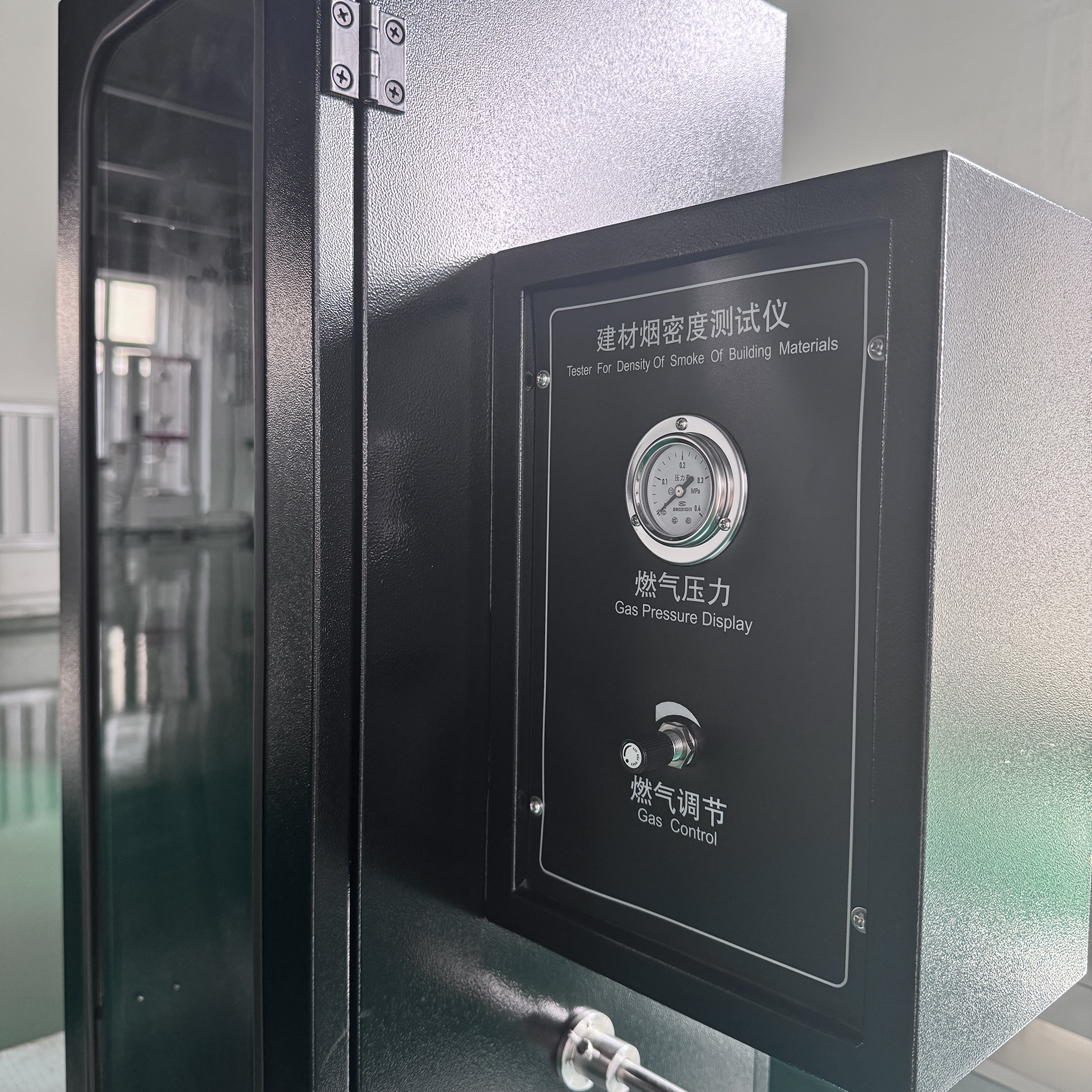
- Complete Supporting Design & Safe Operation Built-in powerful exhaust fan to discharge combustion waste gas; standard 220V power supply, adjustable propane gas pressure 0–0.3MPa, compact 740×500×900mm body, easy maintenance and suitable for testing building materials & solid materials smoke release performance.
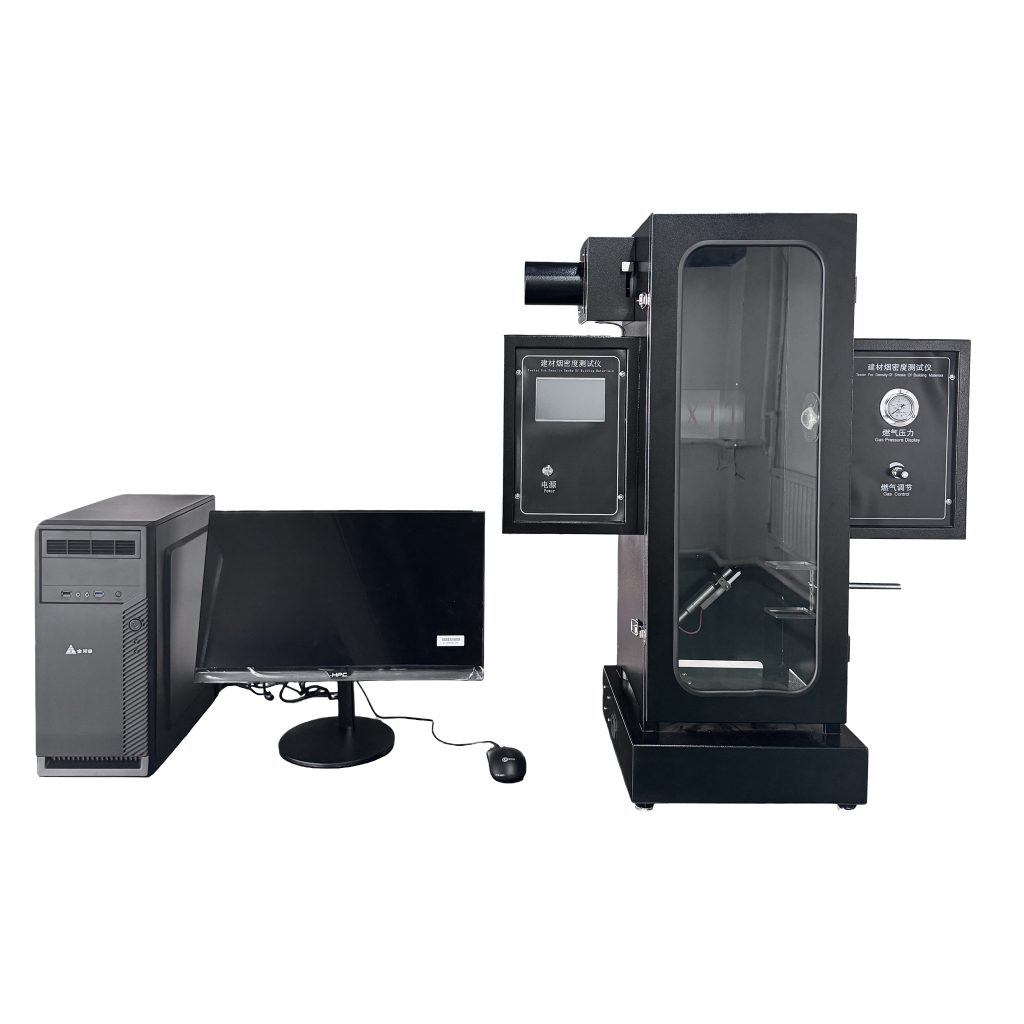
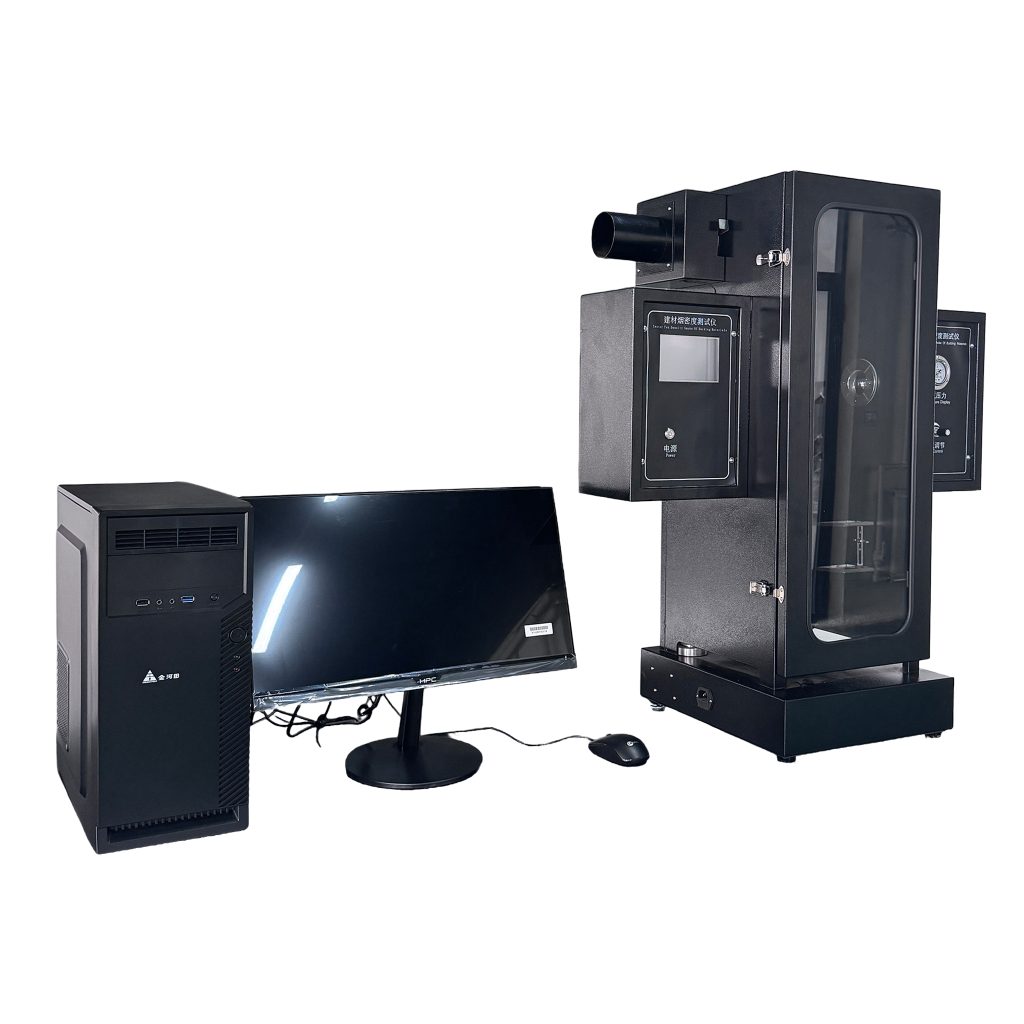
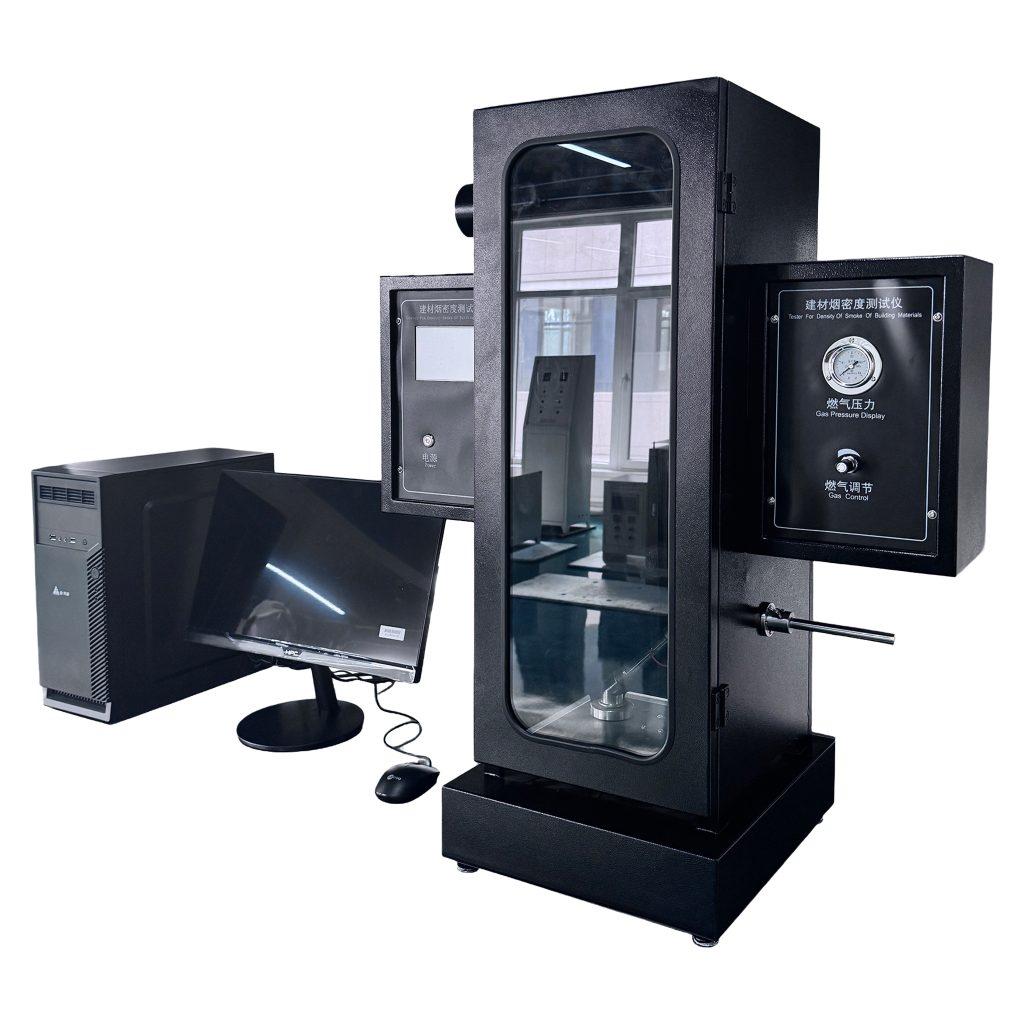
JYMD Building Materials Smoke Density Tester
Product Description:
Developed based on the technical conditions specified in the national standard GB/T 8627—2007″Standard Test Method for Density of Smoke from the Burning or Decomposition of Plastics”. Compared to the original instruments using single-chip microcomputer technology, this product has the following features:
- Dual control modes: can be operated via the touch screen or computer, with easy switching between the two. !One device can be operated by several computers simultaneously, allowing multiple online connections and local area network (LAN) sharing..
- The main and auxiliary burners rotate automatically with accurate positioning.
Reasonable structural design, convenient operation and maintenance, suitable for determining the static smoke production of building materials and their products, as well as solid materials.
Applicable Standards
Designed according to GB/T 8627-2007″Standard Test Method for Density of Smoke from the Burning or Decomposition of Plastics”. Its test principle, procedures, and specimen preparation are all derived from this standard. Detailed reading of GB/T 8627-2007 before testing will provide comprehensive guidance.GB/T 8627-2007 will be very helpful.
Technical Parameters
- Maximum Smoke Density (MSD) and Smoke Density Rating (SDR) of the specimen: MSD) and SDR: 0-100% continuously measurable, automatic calculation;
- Bunsen burner applies flame to the specimen for 4 min;
- Burner: Bunsen burner, length 260 mm, nozzle diameter 13 mm, at a 45°angle to the smoke box;
- Photoelectric system: light source is a bulb, working voltage 12V;
- Exhaust system: equipped with a powerful exhaust fan to discharge waste gas from the combustion chamber after testing;
- Smoke density measurement range: 0 to 100%;
- Smoke density measurement accuracy: ±3%;
- Receiver: Silicon photocell; light transmittance 0%means no light passing through, and 100% means light passes through completely without obstruction;
- Main burner working pressure: 276 kPa(adjustable);
- Automatic timing, ignition, and smoke exhaust;
- Touch display screen:
- Size: 5-inch effective display size, length 11 cm, width 28 cm;
- Resolution: 800 * 480
- Communication interface: RS232, 3V CMOSor TTL, serial port mode
- Storage capacity: 1 GB
- Pure hardware FPGAdriven display, “zero” startup time, ready to run upon power-on
- Uses M3+FPGAarchitecture, M3 is responsible for instruction parsing, FPGA focuses on TFT display; speed and reliability lead similar solutions
- Main controllers all use low-energy processors and automatically enter energy-saving mode
- Length * width * Height: 740 * 500 * Height 900 (mm);
- Working Conditions
- Ambient temperature: 0℃-40℃;
- Relative humidity: ≤ 85%;
- Power supply voltage and power: 220V ± 10%, 50 Hz, 100 W;
- Combustible gas: Propane with a purity of not less than 85%or gas of equivalent purity (provided by the customer);
- Gas pressure: 0-0.3 MPa(adjustable);
- Environment and test requirements: Avoid direct strong light or reflection onto the instrument during operation; after the test has been running for 90 min, turn off the gas source and let the instrument cool for 15 min;
- Ambient airflow: No forced airflow during operation;
- The instrument should be placed in a fume hood for testing;
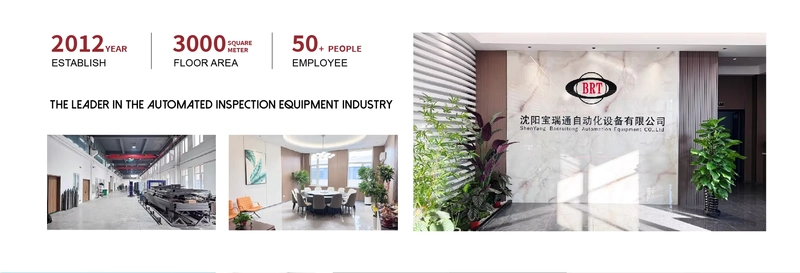
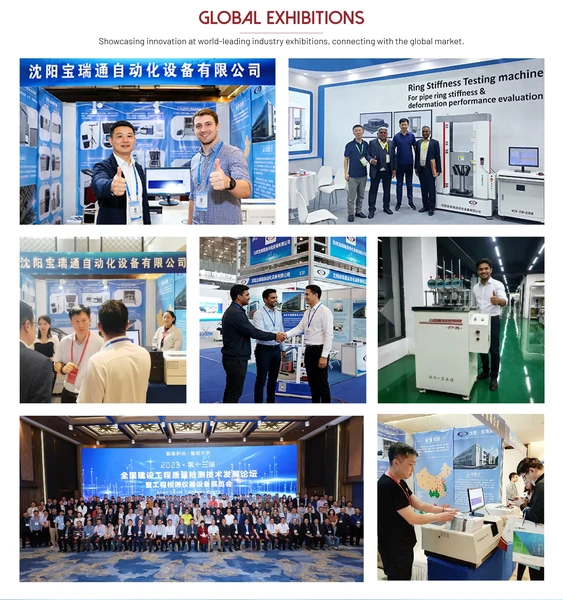
Shenyang Baoruitong Automation Equipment Co., Ltd. was founded in 2012 and is located in Shenyang, Northeast China's traditional equipment manufacturing base. With a registered capital of RMB 5 million, the company specializes in the R&D, manufacturing, sales, and service of testing equipment. Our products are widely used in construction engineering, fire protection, HVAC, energy-saving,environmental protection, and water-saving fields. We have developed over ten product series with more than one hundred models, including building testing, HVAC testing, fire testing,coating testing, curtain wall and glass testing, and PVC pipe testing. With reliable and stable performance, our products remain highly competitive and are trusted by customers across various industries.

Are You a Manufacturer or a Trading Company?
Shenyang Baoruitong is a professional manufacturer of testing equipment, not a trading company. With more than ten years of experience in developing automated testing systems, we provide complete solutions covering product design, hardware development, software integration, manufacturing, installation, and after-sales service.
Our proprietary technologies achieve measurement precision of up to ±0.001 mm, while our modular engineering approach allows rapid customization to meet specific customer requirements. Certified under ISO 9001 and CE standards, our products are exported to more than 30 countries worldwide.
What Is Your Production Capacity?
Our company operates a standardized manufacturing facility covering 3,000 square meters, with an annual production capacity exceeding 500 units of testing equipment.
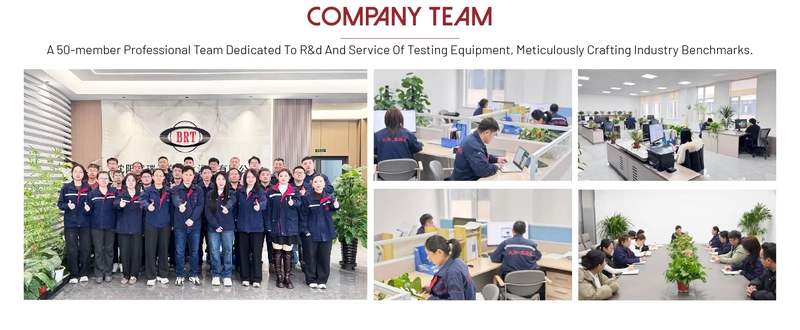
Supported by a dedicated R&D team of more than 20 engineers and specialists, we have successfully completed large-scale projects for the solar energy, building energy efficiency, and fire safety industries, ensuring reliable product quality and on-time delivery.
What Certifications Do Your Products Have and How Is Quality Ensured?
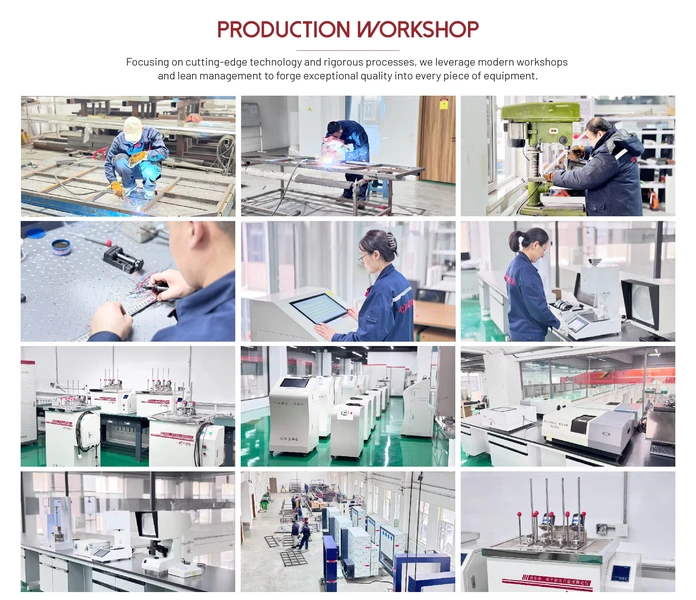
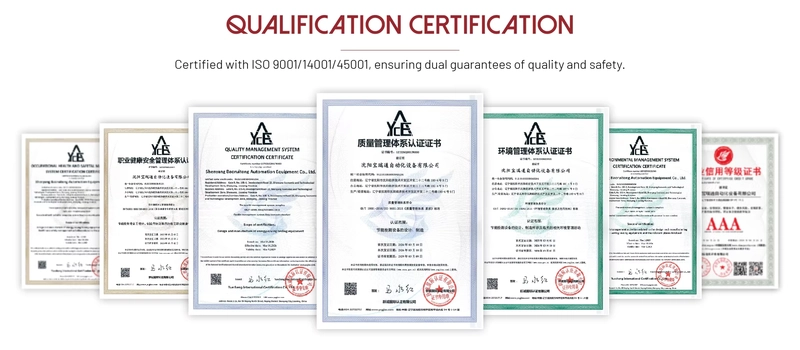
All product lines are manufactured under the ISO 9001 Quality Management System. Core testing equipment is CE certified and supported by independent third-party testing reports where applicable.
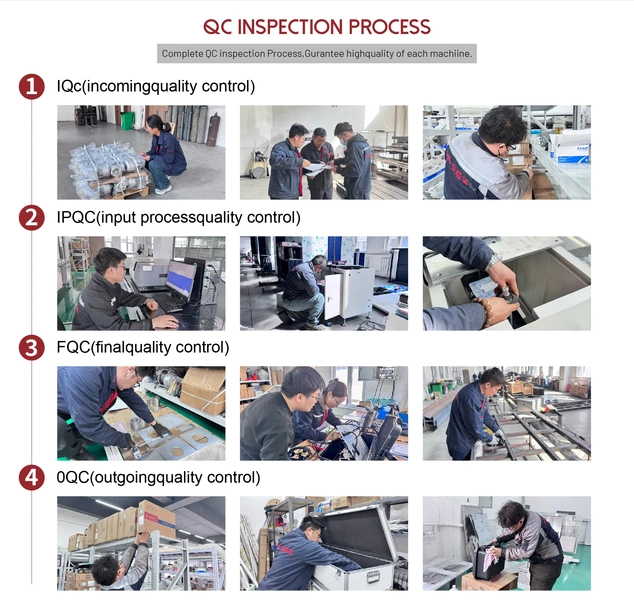
Our quality assurance process includes:
- 100% incoming raw material inspection
- Three-stage quality control during production
- Comprehensive performance testing before shipment
- 24-hour continuous operation testing to ensure stable performance
Is the Equipment Difficult to Operate? Is Training Required?
No. The equipment features an intuitive bilingual Chinese-English touch-screen interface with one-click testing procedures, making operation simple and user-friendly.
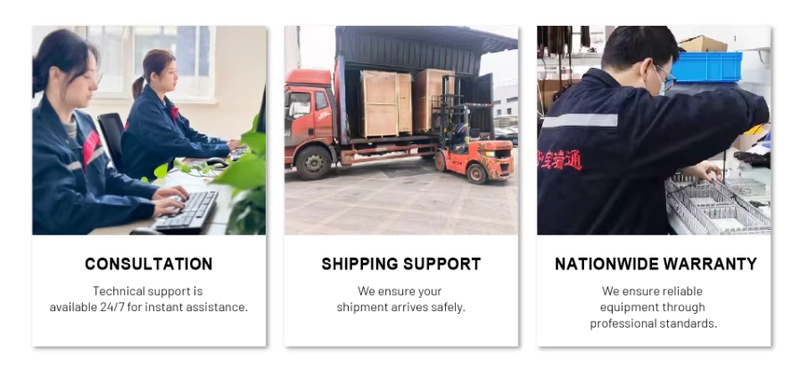
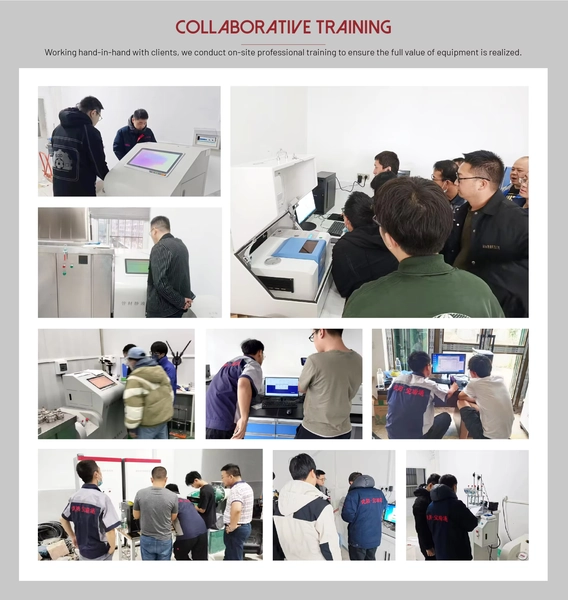
We provide free online and on-site training. Most users can operate the equipment independently within one to two days. Detailed user manuals, video tutorials, and remote technical assistance are also available whenever support is needed.
Are Operating Costs High? Is Maintenance Complicated?
Operating costs are low thanks to energy-efficient hardware that typically consumes around 30% less power than comparable industry equipment.
Daily maintenance is straightforward. The modular design allows quick replacement of components and consumables, while routine maintenance generally involves only basic cleaning and periodic consumable replacement.
We provide comprehensive maintenance documentation and lifetime technical support to ensure long-term equipment reliability and performance.